Glen Raven Textile Applications
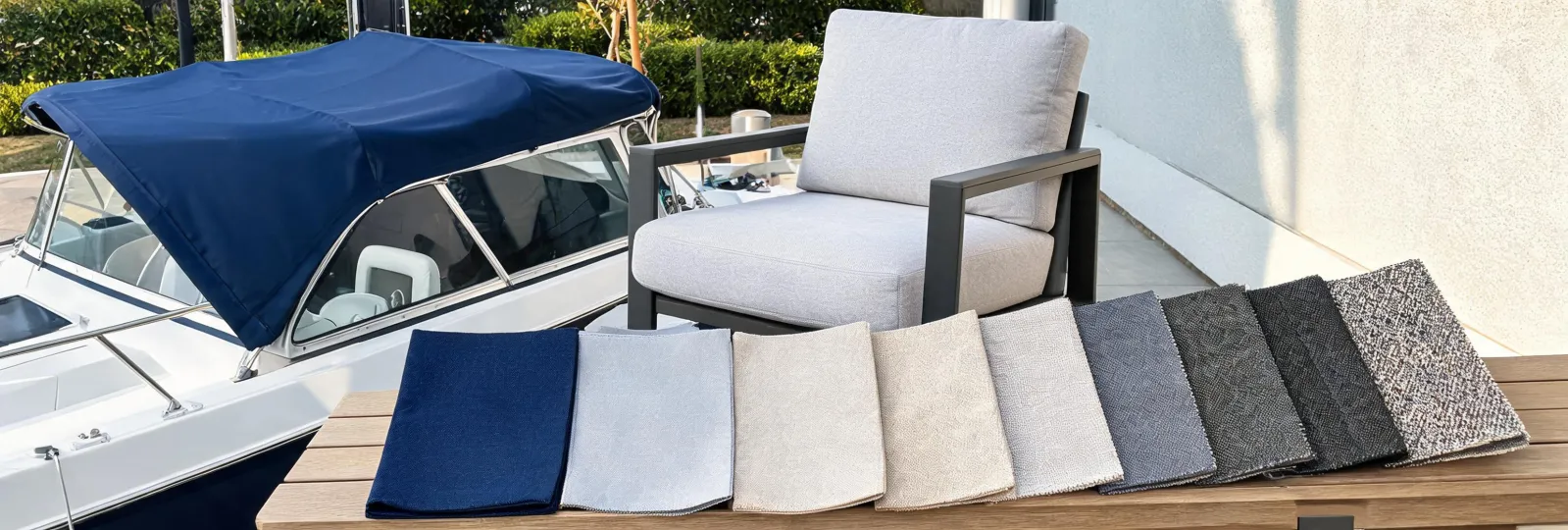
Open the application group that matches the actual weather, care and assembly system.
Specify solution or piece coloration, usable width, tensile and tear direction, ultraviolet colorfastness, water response and fabrication method. Wind loading belongs to the complete engineered structure; fabric data alone does not qualify installation.
Review coating or lamination, hydrostatic-head method, flexing, dimensional stability, mildew-care protocol and hardware interaction. Seam, zipper and vent design determine whether water is managed in the finished cover.
Balance handfeel and drape with light exposure, wet drying, abrasion, pilling and repeated cleaning. Cushion foam, drainage and storage practices affect field performance beyond the textile specimen.
Define occupancy, cleaning agents, seam design, abrasion method, color transfer and applicable fire requirement. Component results must be distinguished from completed furniture or barrier-system qualification.
Selection boundary
Natural and synthetic fibers, solution and piece coloration, direct coating and lamination each involve trade-offs in feel, consistency, MOQ, repair, recycling and performance. The sourcing record identifies the chosen route and the tests still required instead of naming a universal winner.
Method selection
Outdoor exposure is defined by light source, duration, moisture and endpoint. Hydrostatic pressure and spray response answer different questions. Tear and tensile require direction and specimen conditions. Upholstery abrasion requires the named Martindale or Wyzenbeek procedure, abradant and endpoint.
Cleaning trials use the actual product, dilution, dwell time, wiping material and repetition. Installed shade, marine and seating systems also require review of seams, hardware, foam, adhesives, drainage and structural requirements outside a textile result.
Match the RFQ to the end-use system.
Send exposure, assembly, care and market requirements. Identify whether the fabric is a component, cover, upholstery face or engineered structural element, because each role creates a different verification boundary.
Submit Application Brief