“Waterproof” becomes a system question
Specify hydrostatic-head method and specimen, then address coating, seams, closures and installation separately. A fabric result does not establish a finished cover.

Replace vague performance labels with comparable technical and commercial fields.
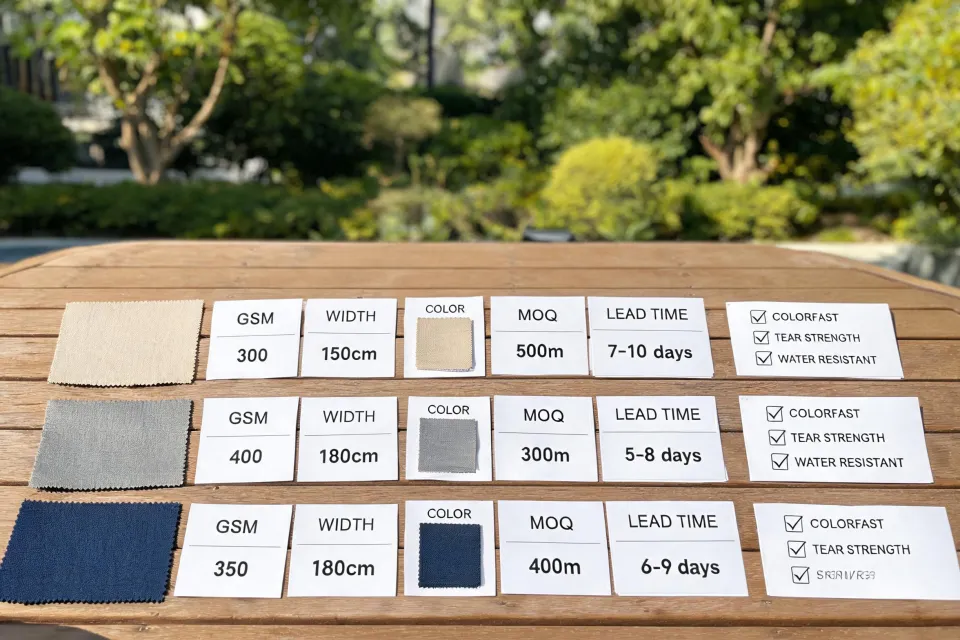
One record connects application, sample, offer, evidence and release.
This checklist counts confirmed fields; it does not predict quality or supplier performance.
Application · fiber · construction · GSM · width · color · finish · method · quantity · MOQ · incoterm · destination · target date
Specify hydrostatic-head method and specimen, then address coating, seams, closures and installation separately. A fabric result does not establish a finished cover.
Name standard, illuminant, tolerance and lot. Solution-dyed routes may support weathering but can constrain MOQ and color changes; piece dyeing offers flexibility with tighter lot control.
Separate stock check, memo dispatch, trial yardage, production approval and shipping. Lead time begins from an agreed trigger, not from an undefined inquiry date.
Quotes remain comparable when units, tolerance, packaging, incoterm and destination match. Test evidence remains applicable to the material, finish, color and date within its scope.
Mark each field mandatory, target, supplier-confirmed or open. This separates a compliance gate from a preference and gives suppliers a place to disclose variance. Sample approval records stage, reference, reviewer, date and purpose; it does not approve future bulk automatically.
MOQ is confirmed by construction and color. Lead time is divided into sampling, color approval, production and transit. Proposed alternates require comparison of fiber, weave, GSM, width, finish, coloration, methods and application processing.
Mark mandatory fields and open selection questions. Attach the color reference, applicable method list, quantity breakdown, destination and milestone dates, then record every accepted exception before order release.