The Cheapest Quote Isn't the Cheapest Purchase
The lowest unit price is almost never the lowest total cost—and I've got the invoices to prove it.
I'm the office administrator for a 40-person specialty products company. I manage all material ordering—roughly $450,000 annually across 11 suppliers, across three locations. I report to both operations (who need deliveries on time) and finance (who want the spend line down). Those two priorities rarely line up neatly, and my job is to reconcile them.
For my first three years in this role, I did what seemed obvious: I put quotes side by side, compared unit prices, and picked the lowest one. In 2024, during a vendor consolidation project, I went back through every purchase order from the previous two years and totaled up what each “cheap” decision had actually cost us. That exercise changed how I buy.
Since then I do a reconciliation every quarter. The pattern keeps confirming itself: the vendors that look expensive on a per-unit basis are usually the ones I don't have to babysit. The cheap ones cost me in follow-ups, escalations, and reorders.
What “Total Cost” Actually Means
The mistake most of us make is that we treat the quote as the cost. It's not. The quote is one input. The real cost of a purchase usually breaks down into six pieces:
- Base unit price (what's on the quote)
- Freight, handling, and import fees
- Setup, calibration, or tooling
- Admin time—quotes, follow-ups, AP reconciliations
- Risk cost—rejection rate, rework, replacement
- Time cost—lead-time delays and their downstream impact
On their own, none of these is dramatic. Together they can swing a purchase by 20-40%. I know that sounds like a made-up range, but our numbers from 2022–2024 hovered in that band across three of our main material categories.
How I Apply This Now
I'll walk through three purchases to show how differently this plays out depending on what you're buying.
Carbon Fiber
Toray carbon fibers are a clean example because the grades are explicitly tiered—T300 through T1100. On paper, T300 looks like the budget option. But if you're building parts where the strength-to-weight ratio matters, the T300 “discount” gets eaten by thicker layups, more resin, and additional labor. The unit price is the least interesting number in that conversation; cost per acceptable part is the one that matters.
I'm not a composites engineer—I lean heavily on ours. My job is to verify the supply side: lead time, certifications, and whether the vendor can actually deliver the consistency they promise. It's also useful to know where a vendor sits in the broader market. Toray reports a leading position in carbon fiber global market share—around 30-35% depending on how you count it (source: Toray annual reports; verify current figures). That scale matters because supply continuity and product consistency are part of total cost, even if they don't show up on any invoice.
Nylon Belt Material
This is where I learned the lesson properly. In 2021, I switched our nylon belt material supplier to one quoting 18% below the incumbent. Classic beginner error: I assumed “standard specification” meant the same thing to both vendors. Half the shipment arrived off-tolerance—about 3mm wider than spec—and the downstream unit rejected it. Return freight, rush reorder, and a week of schedule slip cost us 22% more than the original vendor's quote would have. Finance flagged the variance in the next quarterly ops review, and I spent more time explaining it than I would have spent negotiating the original quote.
That was a $3,100 lesson. Now I verify spec tolerances in writing before I compare price at all.
Children's Fleece Hoodies
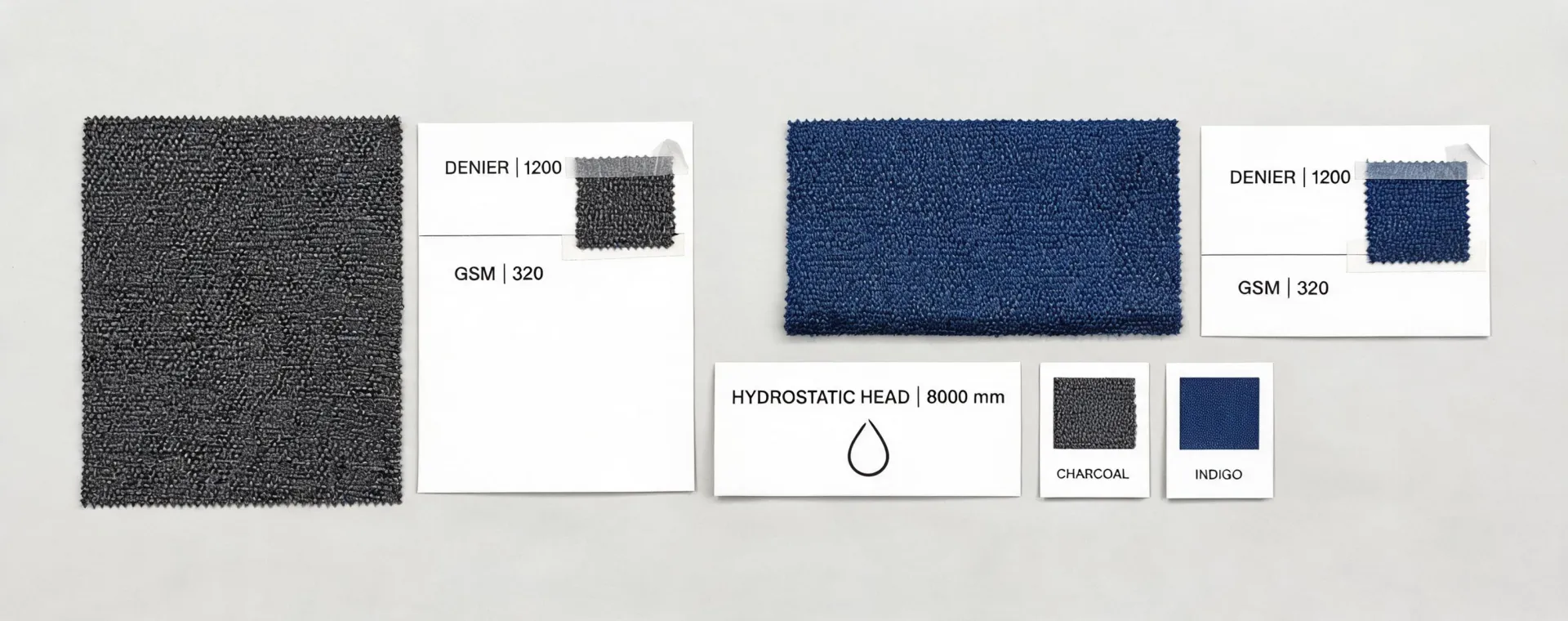
We order children's fleece hoodies every year for our company family-day event. Two years ago I went with the lowest per-unit quote. The delivery arrived four days late, the size chart was off by about half a size, and roughly 30% of the order got returned. Last year I used a vendor with a longer lead time and a higher unit price, but tighter QC. Zero returns. No awkward email to my ops lead explaining why half the team's kids were swimming in their hoodies.
One thing I looked at during vendor selection that second year was design support. A couple of the vendors we shortlisted had staff trained at some of the top textile design schools—the kind of background that shows up in a well-built size chart and consistent fabric. Sounds like a soft factor. Turns out it was a hard cost saver.
When the Cheapest Quote Is Actually the Right Call
None of this means “always buy the more expensive option.” When the material is commodity-grade, the spec is simple, and the cost of failure is low, the cheapest quote usually wins. That's true for basic consumables, standard office items, and anything where a bad delivery is an inconvenience rather than a schedule hit.
Where it falls apart is when the material feeds into something downstream that carries risk. If a late or off-spec delivery can cost you a customer, a launch date, or a week of rework, the cheapest quote becomes the most expensive decision in the room.
The other exception: very small orders. Below a certain order value, the admin overhead of a thorough TCO comparison costs more than the potential savings. I don't run full cost breakdowns for a $200 consumables order—I just check that the vendor is reliable and move on.
What this habit really does is force me to be honest with myself about what a purchase actually involves, instead of taking the comfortable shortcut of “lowest number wins.” I still get it wrong sometimes. The difference now is that I usually catch it before the PO goes out, not after finance rejects the invoice (thankfully).