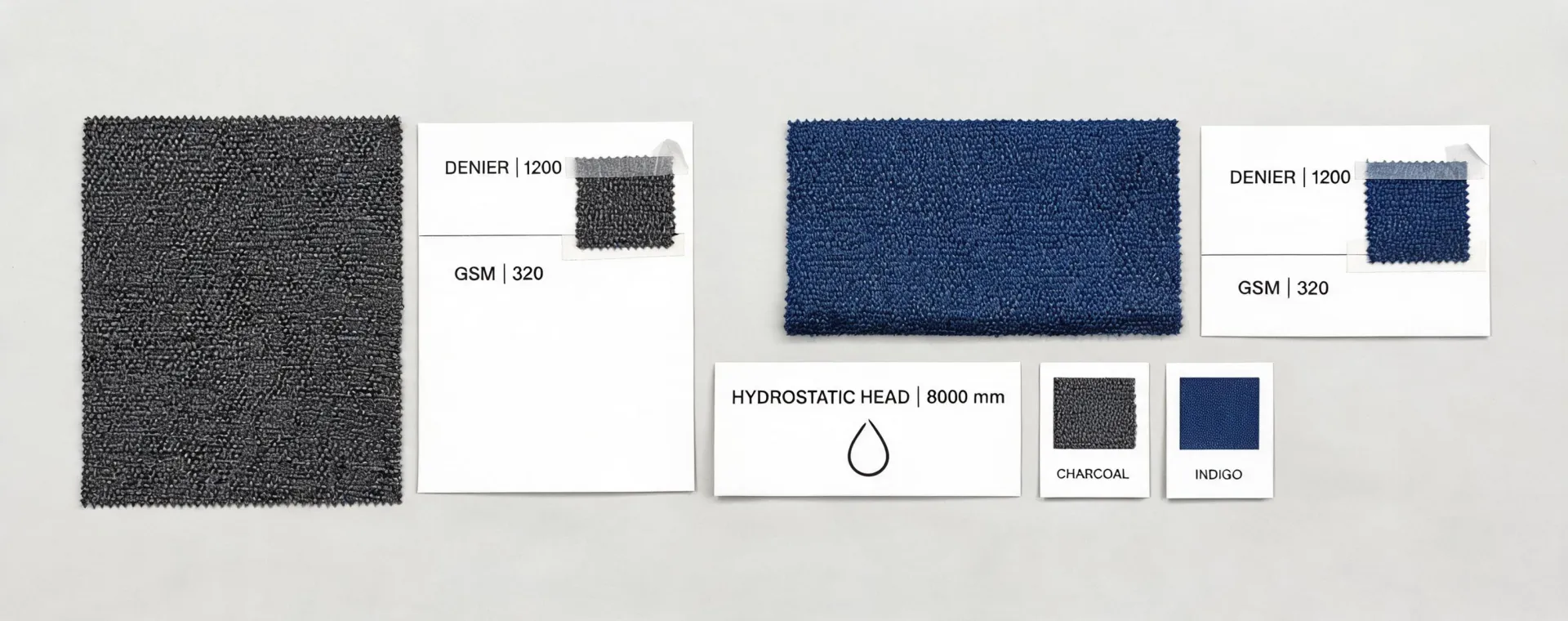
I've been buying bath towels, office textiles, and nylon webbing for our company since 2020. We're around 400 people across three locations. I manage about eight vendors and roughly $480k in annual purchasing spend. Here's what I've figured out: the biggest decision isn't which brand you pick. It's which channel you buy through.
Two channels dominate my day-to-day: direct wholesale (Trident, plus one other mill) and retail or e-commerce. I've used both. They're not interchangeable, and the difference isn't just price—it's color, durability, invoicing, and lead time. Here's the five-dimension comparison I wish someone had handed me in 2019.
1. Feel and Color Consistency
Retail wins the first touch. Full stop. I handled the Trident Vibes Cotton Candy line at a showroom in Dallas back in 2023, and I knew within 30 seconds it was the palette we wanted for the lobby restroom refresh. You can't get that from a spec sheet—you need to feel the terry and see the color under real light.
Wholesale is the opposite experience. Swatches. Pantone references. Photos taken under studio lighting that don't match anyone's bathroom. If the color is off when the pallet lands, you're sitting on 200 units of the wrong shade.
This is where I started caring about color tolerance. The Pantone Matching System treats Delta E under 2 as brand-critical tolerance. Delta E between 2 and 4 is noticeable to trained eyes; above 4 is visible to pretty much anyone. Cotton candy tones are especially unforgiving because slight warm/cool shifts read as completely different colors.
On the review side: the Trident Urban Comfort bath towel reviews I read before ordering ran about 65% four or five star. The recurring complaints were color shift after roughly five washes and pile height slightly shorter than the pictures. Our own testing matched the first complaint on the cotton candy version but not on white or charcoal. The pile height thing was a non-issue—it fluffed up after two washes.
My conclusion: retail wins on first touch, wholesale wins on consistency once the spec is locked. If you're buying once, retail. If you're restocking quarterly, direct wholesale with a physical reference sample is the only way to keep the color stable.
2. Durability and the Vinegar Test
Retail towels are weirdly hit-or-miss. Some last 40 wash cycles. Some lose their hand after 10. Wholesale doesn't magically fix that either—specification does.
When I took over purchasing in 2020, I made the classic mistake: assumed "100% cotton" meant the same thing everywhere. It doesn't. Ring-spun versus open-end. GSM range. Pile height. None of that shows up on a retail hangtag. I learned the lesson when we shipped 200 towels that felt great in the showroom and turned scratchy after two months.
Here's a specific example. Our microfiber towels for the gym locker rooms used to get a funk after about eight weeks. Someone on my team suggested the vinegar method: half a cup of white vinegar in the wash cycle, no fabric softener. Dramatic difference.
But the catch: cheap microfiber breaks down faster under the vinegar regimen. The fibers shed and the terry loops flatten. Better-spec towels held up through 60+ wash cycles in our testing. A retail three-pack I bought as a control failed around wash 20. Same wash schedule, same detergent, different outcome.
Nylon retractil—retractable nylon webbing for our warehouse dividers—behaves the same way. A 1-inch webbing can vary in breaking strength by 30% between suppliers, and the retail package tells you basically nothing. Wholesale at least gives you a chance to request test data before you commit.
3. True Cost Per Unit (Including the MOQ Problem)
Retail is expensive per unit. Wholesale is cheaper per unit. That's the simple version. Here's the real one.
The wholesale price only wins if you clear three hurdles: minimum order quantity, storage, and cash flow.
A mid-tier bath towel retails for around $14.99. You buy one. It shows up. Done. No leftover inventory, no cash parked.
Trident's direct pricing on comparable spec runs closer to $5.80 per towel—but the MOQ is 200 units and lead time is three weeks. So the real comparison isn't $5.80 versus $14.99. It's $5.80 versus $14.99 plus the $1,160 you've parked in inventory, plus the shelf space, plus the risk that you ordered the wrong spec.
So glad I locked the spec before placing that first wholesale order. Almost ordered "standard white" from three different suppliers—which would've meant three slightly different whites in the same bathroom. That would have been a mess to explain to facilities.
Bottom line: wholesale wins on cost per unit roughly 80–90% of the time in my experience. But only when the spec is locked and the quarterly volume is predictable. For one-off needs, retail wins—because the true cost of wholesale includes the leftover inventory you can't move.
4. Invoicing and Compliance
This is the dimension where retail beats wholesale more often than people expect. And it's the one that gets experienced buyers in trouble.
Retail invoicing is basically invisible. Card statement, done. Wholesale requires W-9s, net-30 terms, PO numbers, and the occasional uncomfortable phone call when a mill sends a handwritten receipt.
I learned this the hard way. In my first year, I found a great price from a new vendor—$300 cheaper than our regular supplier on a 150-towel order. They only provided handwritten receipts. Finance rejected the expense report. I ate $340 out of the department budget. Now I verify invoicing capability before placing any order over $500.
That's not a knock on wholesale. Trident and our other mill do electronic invoicing, W-9 on file, net-30. But that's because I asked before the first order, not after. The compliance layer adds time upfront. It doesn't have to add pain.
5. Lead Time and the Planning Tax
Retail lead time is measured in days. Wholesale lead time is measured in weeks.
For most office textile needs, this doesn't matter—you're restocking on a cadence, not a whim. But it creates a hidden "planning tax" that nobody talks about.
Our quarterly towel order sits at roughly 180 units. Wholesale means planning around three weeks of production lead time plus two weeks shipping. Retail means I can order Monday and have it Wednesday.
The trade-off: roughly nine hours of my annual time managing wholesale schedules versus roughly $6,000 more per year paying retail prices. On paper, that's a no-brainer. In practice, it only works if you can absorb the cash and the shelf space.
Which Channel Fits Your Situation?
Neither channel wins across the board. Here's how I split it.
Choose direct wholesale (Trident or another verified mill) if:
- You're buying on a repeat cadence—quarterly, monthly.
- The spec is locked with a physical sample or Pantone reference.
- You can park the MOQ cash for 30–60 days.
- Your AP team can handle W-9s, net-30, and PO numbering.
- Your team can absorb a 3–4 week lead time.
Choose retail if:
- You need it this week.
- You're testing a color or finish for the first time.
- Volume is under 50 units.
- Your internal process can't yet handle wholesale compliance.
One honest caveat: my experience is based on roughly 40–50 textile and towel orders over six years. If you're buying for a hotel, a hospital, or a five-person office, your math will look different. The principles probably hold. The thresholds won't.
And I still don't fully understand why nylon retractil pricing swings so wildly between vendors. My best guess is it tracks factory capacity and container economics—but don't quote me on that.
Bottom line: if you're buying office textiles on a repeat cadence, wholesale direct is worth the compliance setup. If you're buying once, retail is genuinely fine. And if anyone has a cleaner answer on the nylon webbing pricing question, I'm all ears.