A Tuesday Morning in March 2023
On a Tuesday morning in March 2023, I stood on our factory floor in North Carolina and watched two line workers unroll 12,000 yards of microfiber leather. The color was wrong. Not dramatically wrong—not purple instead of gray—but wrong enough that our customer's design team would notice. We'd committed to 400 headboards and 200 benches for a hotel project. The line stopped for two days while we sorted it out.
I'm a procurement manager at a 120-person contract furniture manufacturer. I've managed our upholstery materials budget ($2.4 million annually) for seven years, negotiated with 30+ fabric suppliers, and documented every order in our cost tracking system. That morning, I learned something I should've known earlier: the cheapest leather fabric quote is almost never the lowest total cost.
The Quote That Looked Too Good
Earlier that quarter, our primary leather fabric supplier had pushed lead times from six weeks to twelve. We needed a backup for a hotel order. I sent specs to five microfiber leather suppliers and asked for quotes on 12,000 yards of a mid-gray, 1.2mm thick upholstery material.
Four quotes came back between $7.80 and $8.10 per yard. The fifth was $7.00. That's 11% below the average. The sales rep said all the right things: 'same specifications,' 'in stock,' 'ships in two weeks.' I assumed 'same specifications' meant the same product. I didn't verify. That assumption cost us.
In my first year in procurement, I made the classic rookie mistake of treating every quote as apples-to-apples. Seven years later, I still have to remind myself: a spec sheet is a starting point, not proof.
What the Fine Print Didn't Say
The first shipment arrived on time. That was the only thing that matched the quote. The color was roughly two shades darker than our approved sample. The Martindale test report we requested never came. When we pressed, the supplier sent a one-page PDF with a number and no test method. The material also had a slightly different hand—stiffer, with less stretch—which affected how our upholsterers pulled it over the frames.
We used it anyway. The hotel deadline was fixed. Our customer agreed to a small discount, we paid for rush rework on 120 headboards, and we ate the overtime. The final math: we saved $9,240 on the lower quote. We spent $15,200 on rework, expedited freight, and a customer credit. That's 18% more than the original order—and I haven't even counted the two days of lost production.
I have mixed feelings about that low-cost supplier. On one hand, they did deliver on time and their material might work fine for a lower-traffic application. On the other, their definition of 'same specifications' wasn't mine. That's on me for not asking better questions.
The Side-by-Side That Changed My Process
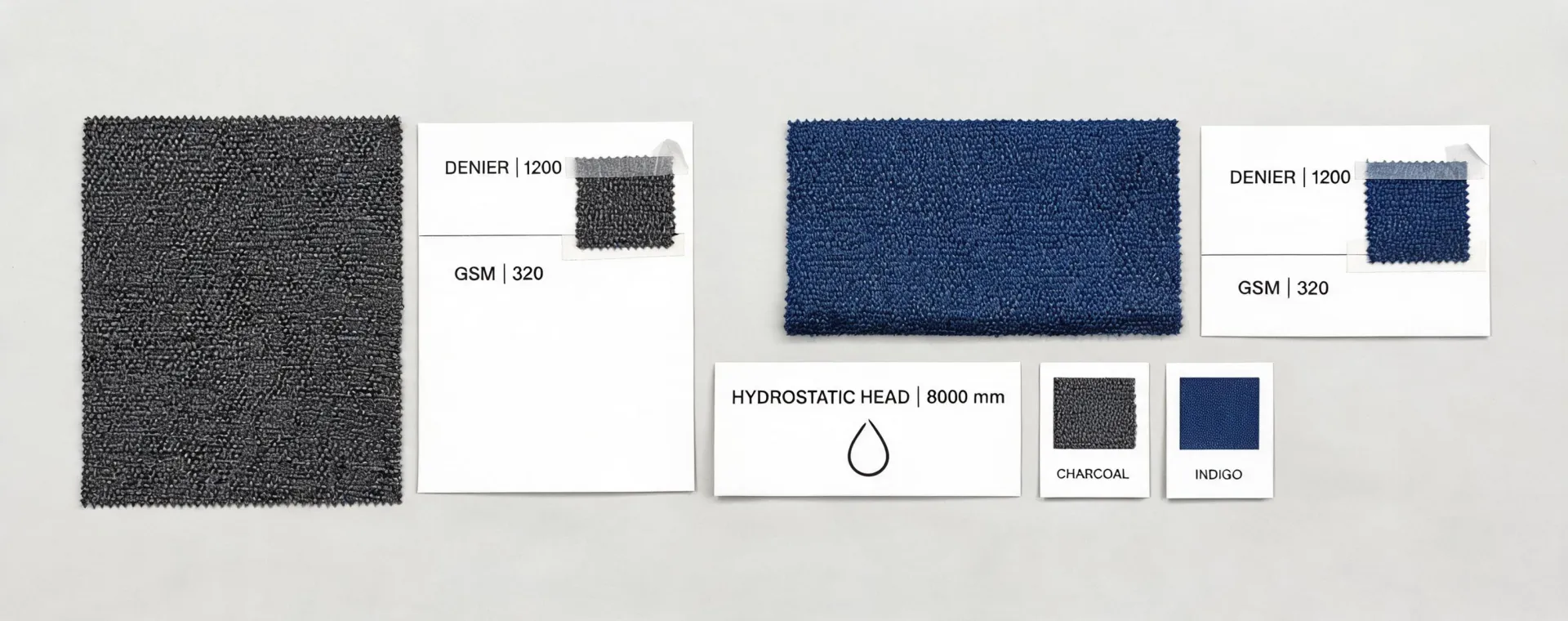
In Q2 2024, we rebuilt our supplier evaluation. I ordered samples from three manufacturers, including Ultrafabrics. I put their Ultraleather and Brisa samples next to the cheaper microfiber leather on a table under our factory's daylight-balanced lamps. When I compared them side by side—same thickness range, similar backings—I finally understood why color consistency and test data matter more than the quote sheet.
The cheaper sample shifted visibly under the light. The Ultraleather sample stayed within our tolerance. The Brisa sample had a different hand and breathability profile that suited our contract seating better. But I'm not telling you Ultrafabrics always wins on price. It doesn't. I'm telling you that a sample on a table tells you more than a quote in an inbox.
According to Pantone (pantone.com), industry standard color tolerance is Delta E below 2 for brand-critical colors. Delta E of 2–4 is noticeable to trained observers; above 4 is visible to most people. Reference: Pantone Color Matching System guidelines. Before that project, I couldn't have told you what Delta E meant. Now I ask for it in writing before I approve any bulk order.
Industry standard color tolerance is Delta E below 2 for brand-critical colors. Delta E of 2–4 is noticeable to trained observers; above 4 is visible to most people. Reference: Pantone Color Matching System guidelines.
How to Evaluate Leather Fabric Manufacturers: The Checklist I Wish I'd Used
If you're evaluating a leather fabric supplier for the first time, here's the six-question checklist we now use. It's not perfect. It's probably overkill for a small order. But it has kept us out of two expensive messes since 2024.
- What's the end use, and which test method matters? Ask for the specific test method—Martindale (ASTM D4966) or Wyzenbeek (ASTM D4157), for example—and the actual number. A claim like 'heavy-duty' without a test method is a marketing sentence, not data.
- What's the color tolerance? Ask for Delta E and the reference standard. If a supplier can't tell you how they measure color, they probably can't control it batch to batch.
- Can they support OEM or private label? If you need custom backings, embossing, or packaging, ask for a sample of a past OEM job. Vague answers here usually mean a trading company, not a manufacturer.
- What's the minimum order and lead-time buffer? The quote might say four weeks. In my experience, you should plan for 20–30% longer for first orders. Ask what happens when a container is delayed.
- Are sustainability claims documented? Bio-based content, solvent-free processing, and recycled content are real categories, but they need certification or test data. A logo is not documentation.
- What's the total cost of ownership? Add freight, duties, MOQ penalties, rework risk, and line-down risk to the unit price. That's the number that matters.
I'd rather spend ten minutes explaining these questions to a new buyer on our team than deal with a mismatched expectation later. An informed customer asks better questions and makes faster decisions—even when the answer is 'we need to pay more for this project.'
What I Do Differently Now
We didn't switch all our business to one supplier. We keep a primary and a backup for each material category. We still buy microfiber leather when the specs and test data line up—it can be a solid choice for the right application. But we no longer approve a quote just because it's 11% lower.
So glad I didn't give that low-cost supplier the full hotel order. We almost did. If we had, the color issue would've hit 400 headboards instead of 120. Dodged a bullet there.
If you're evaluating leather fabric manufacturers right now, ask for samples, test reports, and a written color tolerance before you sign. Then compare total cost, not unit price. If you ask me, the extra week of due diligence is cheaper than the two weeks of rework.
Prices and lead times vary by project, volume, and date. Verify current quotes and test data with each supplier.