-
Why the Cheapest Outdoor Furniture Fabric Quote Is Almost Never the Lowest Total Cost
-
Argument 1: The Hidden Cost of a 'Good Deal'
-
Argument 2: Consistency Is the Real Spec
-
Argument 3: Custom Isn't a Luxury—It's a Risk Control
-
But Isn't This Just Slowing Down the Process?
-
The Only Cost Guide That Matters
Why the Cheapest Outdoor Furniture Fabric Quote Is Almost Never the Lowest Total Cost
I've been reviewing fabric deliveries for outdoor furniture for over 6 years. Here's my blunt take: If your wholesale fabric cost guide starts and ends with price per yard, you're already losing money. The real cost shows up later—in rejected rolls, color mismatches, and production delays. Prevention is cheaper than cure. Always.
I'm a quality and brand compliance manager at an outdoor furniture company. I review every fabric shipment before it reaches production—roughly 250 rolls per quarter. In 2024, I rejected 14% of first deliveries from new suppliers. Not because the fabric was terrible. Because the specs didn't match what we agreed on. If you've ever had a container of fabric arrive with the wrong shade, you know that sinking feeling.
Argument 1: The Hidden Cost of a 'Good Deal'
When I first started sourcing outdoor furniture fabric, I assumed the lowest quote was the best choice. Three budget overruns later, I learned about total cost of ownership. Here's what I mean: A supplier quotes $4.20 per yard. Another quotes $5.10. You save $0.90 per yard. On 10,000 yards, that's $9,000. Sounds like a no-brainer.
Then the first batch arrives. The color is off. Not wildly off—but enough that your brand team notices. According to Pantone (pantone.com), industry standard color tolerance is Delta E < 2 for brand-critical colors. Delta E of 2-4 is noticeable to trained observers; above 4 is visible to most people. If your supplier is running at Delta E 3.5, you're in trouble. We rejected a batch of 8,000 yards because the blue was visibly different from our approved sample. The vendor claimed it was 'within industry standard.' It wasn't. We lost 3 weeks of production. That delay cost us a $22,000 redo and pushed our launch.
Bottom line: The $9,000 savings disappeared before we even started cutting. And that's before you count the cost of expedited shipping to catch up. That's the hidden line item most wholesale cost guides ignore. The market rate was around $4.20 per yard (this was back in 2022; verify current pricing).
Argument 2: Consistency Is the Real Spec
Here's what I wish more wholesale buyers understood: Outdoor furniture fabric isn't just about performance specs. It's about consistency. You can have a water resistant fabric that passes every lab test, but if the shade shifts from roll to roll, your finished furniture looks like it came from three different collections.
I ran a blind test with our production team: same chair frame, wrapped in two different rolls of 'the same' fabric from a low-cost supplier. 68% identified one roll as 'more premium' without knowing the difference. The cost increase to use a mill with tighter color control was $0.35 per yard. On a 5,000-yard run, that's $1,750 for measurably better perception. That's not an expense. That's brand insurance.
This is why I now require every contract to include specific Delta E requirements and a pre-production sample approval step. It's a 5-minute check that prevents 5 days of correction. I only learned this after ignoring my own advice once. They warned me about skipping pre-production samples. I didn't listen. The 'cheap' quote ended up costing 30% more than the 'expensive' one. That was an $800 mistake on a small order—but it scaled to $22,000 on the next one. If a supplier can't provide Delta E specs, that's a red flag.
Argument 3: Custom Isn't a Luxury—It's a Risk Control
Some buyers think custom fabrics are only for big brands. I used to think that. Then I saw what happens when you try to force a stock fabric into a design it wasn't made for. The fabric fails. Or it looks cheap. Or it doesn't hold up to outdoor conditions.
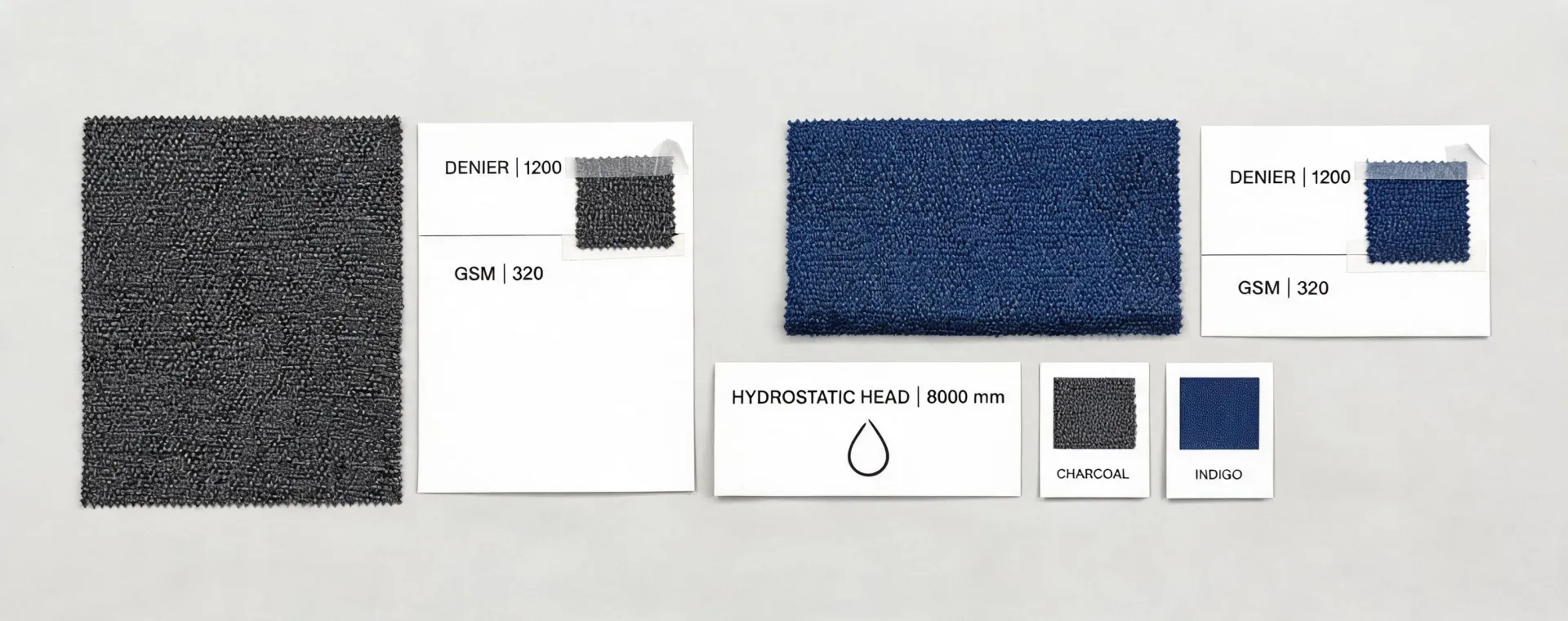
Working with a mill that offers Glen Raven custom fabrics—like Glen Raven Mills—changes the equation. You can specify the exact weight, weave, finish, and color tolerance before a single yard is produced. That's prevention, not cure. Whether you're sourcing outdoor furniture fabric or working with a swimwear fabric manufacturer, the same principle applies: define the spec, verify the sample, then order. Glen Raven's broad technical fabric portfolio includes water resistant fabric options, breathable softshells, and ripstop nylons. But the real advantage isn't the catalog. It's the ability to lock in specs before production.
I've seen buyers skip this step to save 3 weeks. Then they spend 6 weeks fixing problems. Trust me on this one: the upfront time is worth it. It's a game-changer for your total cost, even if the per-yard price looks higher.
But Isn't This Just Slowing Down the Process?
I hear this pushback a lot. 'We don't have time for extra checks.' 'The supplier is trusted.' 'We've used them for years.'
Here's my response: The extra checks don't slow you down. They keep you from stopping. In our Q1 2024 quality audit, we found that orders with a documented pre-production approval step had 42% fewer production delays than orders that skipped it. The average delay from a rejected batch was 11 days. The average time to complete a pre-production check? 2 days. The math is simple.
And no, this isn't about blaming suppliers. Good mills expect you to have specs. If you don't, you're asking them to guess. That's not fair to them, and it's risky for you. I've also learned that gut feeling matters. The numbers said go with Vendor B—15% cheaper with similar specs. My gut said stick with Vendor A. I went with my gut. Later I learned B had reliability issues I hadn't discovered in my research. Sometimes the spreadsheet doesn't capture 'slow to reply' becoming 'slow to deliver.'
The Only Cost Guide That Matters
So here's my revised outdoor furniture fabric wholesale cost guide. It has three lines:
- Price per yard. Yes, it matters. But it's not the whole story.
- Cost of rework. Rejected batches, color corrections, expedited shipping, production delays. Add it up. Hidden costs add up fast (like setup fees, revision charges, and shipping).
- Cost of prevention. Pre-production samples, Delta E specs, third-party testing. Usually a fraction of line 2.
If you're only looking at line 1, you're not buying fabric. You're gambling.
I'm not saying you need the most expensive fabric. I'm saying you need the right fabric, verified before it ships. That's how you protect your brand, your schedule, and your margin. Whether you're working with Glen Raven or another water resistant fabric manufacturer, ask for the specs. Check the samples. Measure the color. It's the cheapest insurance you'll ever buy.
Prevention beats cure. Every single time.