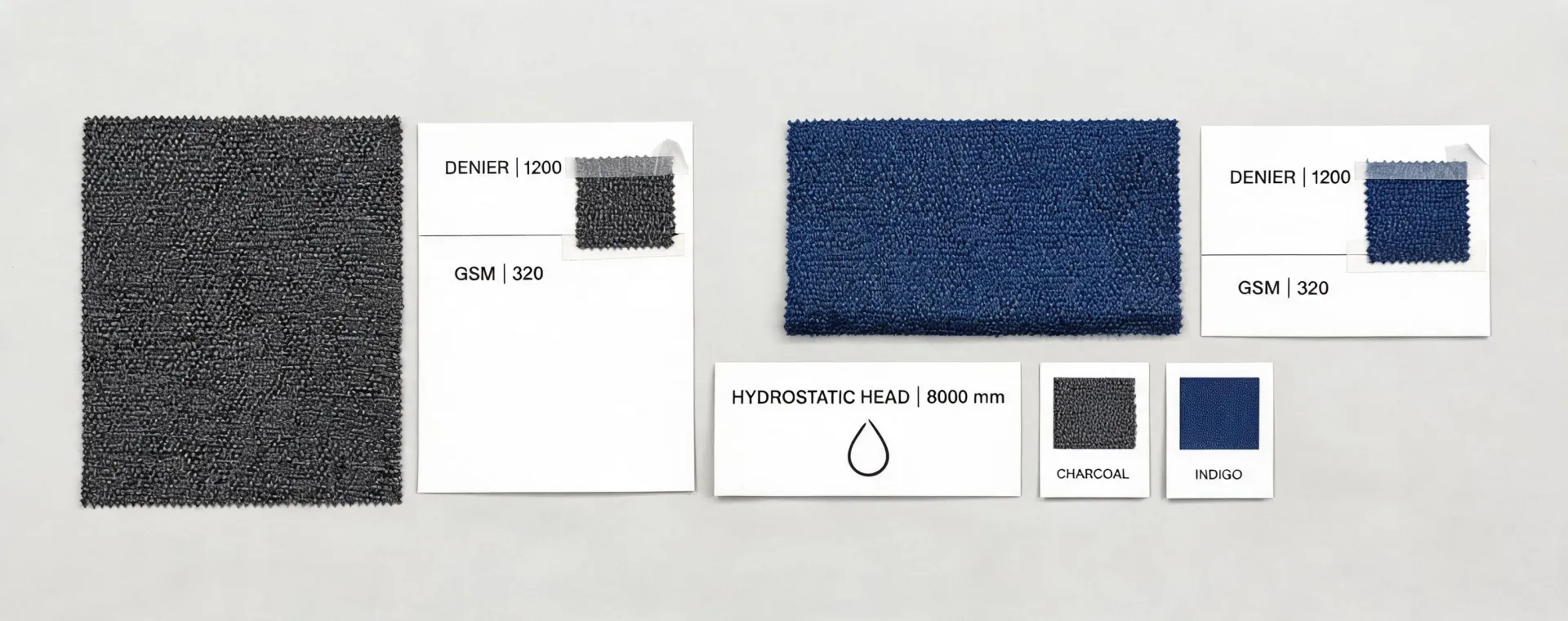
Start with the spec, not the price
If you’re sourcing bulk oxford fabric, ripstop, or curtain fabric, the lowest quoted price per yard is usually not the lowest total cost. The real cost shows up when a roll is off-shade, coating adhesion fails after cutting, or a curtain fabric misses the flammability spec and you have to re-run a production order. Before you ask for quotes, lock the performance spec: fiber content, yarn denier, weave or construction, weight, width, coating and finish, test method, tolerance, and lot traceability. Then compare suppliers against that spec—not against a vague “similar” sample.
I’m saying this from the buyer side. I review fabric lots before they hit production, and in 2023 I rejected roughly 12% of first deliveries because the hand, shade, or coating was visibly off. It’s not that suppliers are villains. It’s that “same spec” means different things to different mills. And in B2B fabrics, those differences get expensive fast.
Why I trust a spec sheet more than a sales deck
When I compared two bulk oxford fabrics side by side—same 600D claim, same PU coating claim—I finally understood why “same” is a dangerous word. One had about 25% lower tear strength in the weft after accelerated aging. On paper, both looked fine. In the cutter, one ran clean; the other frayed and slowed the line. The price difference was around $0.18 per yard. The production slowdown and waste added up to more than the savings on a 10,000-yard order. That’s the hidden cost math most quotes don’t show.
For ripstop, the trap is similar. A distributor may offer ripstop nylon with a grid, but the grid spacing, yarn size, and calendaring can change tear propagation, hand, and printability. If you’re making outdoor gear, flags, or performance liners, you need the actual construction details—not just the word ripstop. Ask for denier, filament count, grid interval, weave type, coating add-on, and tear strength by direction. If the supplier can’t provide that, you’re not buying a spec; you’re buying a hope.
Curtain fabric is a different animal. You’re balancing drape, opacity, dimensional stability, colorfastness, and fire performance. If your curtain fabric specification guide only says polyester, 250 GSM, 118-inch width, you’re leaving too much to chance. You should specify composition; weight tolerance; width tolerance; weave; yarn type; shrinkage after washing or dry cleaning; colorfastness to light; crocking; flammability test; seam slippage; and whether the fabric is railroaded or up-the-roll. Also, confirm the finish—FR, stain release, antimicrobial, or blackout coating. Finishes are where cheap can become costly because they affect hand, odor, durability, and compliance.
Where Glen Raven and custom fabric programs fit
Glen Raven and Glen Raven Mills have a long history in performance fabrics. Glen Raven custom fabrics can be a fit when you need a technical fabric developed around an end use rather than picked from a catalog. That’s useful if you’re an OEM, private-label brand, or distributor with a repeatable program. But customization doesn’t remove your responsibility to define the spec. If anything, it raises the bar: you need a clear development brief, a test plan, approved lab dips, and first-article approval.
If you’re looking for a ripstop fabric distributor or bulk oxford fabric supplier, the same rule applies: use the brand’s capability as a starting point, not a substitute for your own spec. A good mill or distributor will ask you questions—end use, expected life, cleaning method, UV exposure, abrasion cycles, color tolerance. A weak one will quote immediately from a generic construction. I’d rather wait three days for questions than three months for a redo.
The lowest quote has cost us more in about 60% of the projects where we chased price first. Not every time—but enough that I stopped treating unit price as the main number.
Put another way, total cost of ownership for fabric includes more than the invoice. It includes incoming inspection, cut-and-sew yield, downtime, reorders, freight for replacements, chargebacks, and the brand risk of a customer noticing a shade shift. That $200 savings on a small order can turn into a $1,500 problem when you need to expedite a replacement roll and rework completed goods. I’ve seen that movie. I don’t recommend it.
The numbers to put in a curtain fabric specification guide
Here’s the practical checklist I use. It’s not perfect, and your mileage may vary by market, but it catches most of the expensive misses.
1. Identity: fiber content, yarn denier, filament versus spun, weave or construction, weight in GSM or oz/yd², width, roll length, and shade standard. Include tolerances. “About 250 GSM” is not a spec. “250 GSM ±5%” is.
2. Performance: tensile strength (ASTM D5034), tear strength (ASTM D1424), abrasion (ASTM D4157 Wyzenbeek or ASTM D4966 Martindale), colorfastness to light (AATCC 16 or ISO 105-B02), colorfastness to crocking (AATCC 8), dimensional stability after cleaning, and seam slippage. For curtains, add flammability per NFPA 701—confirm the edition and whether your fabric needs small-scale or large-scale testing. According to ASTM International (astm.org) and AATCC (aatcc.org), test methods and editions matter; don’t accept a report that doesn’t name the method and date.
3. Finish and coating: PU, PVC, PA, acrylic, FR, stain release, antimicrobial, water repellent. Specify add-on percentage or performance target, not just coated. Coating adhesion and flex durability matter for oxford and ripstop. If the coating cracks after folding, the fabric failed in the field even if the lab test passed.
4. Batch and traceability: dye lot, roll ticket, lot number, test report per lot or per shipment, and retained samples. In my experience, shade variation is one of the top reasons first deliveries get rejected. It’s not always the mill’s fault—lighting and lab dips matter—but traceability at least lets you find the root cause.
What I’m still unsure about
Honestly, I’m not sure why some mills handle dye-lot consistency better than others. My best guess is it comes down to internal color approval discipline, updated equipment, and how they schedule dye runs. Some vendors consistently hit shade targets; others send something “close” and hope you won’t notice. I’ve never fully understood the pricing logic for rush orders, either. The premiums vary so wildly that I suspect it’s more art than science.
Also, take this with a grain of salt: not every buyer needs a 30-page spec. If you’re doing small custom drops or trend-driven sampling, flexibility may matter more than locking every parameter. A rigid spec can slow you down. But once you move into bulk oxford, ripstop distribution, or contract curtain programs, the cost of ambiguity goes up fast.
Boundary conditions: when price-first might actually work
I can only speak to B2B programs where consistency and compliance matter. If you’re buying commodity fabric for a non-critical application—say, disposable covers or prototypes where no one will measure tear strength—then the cheapest option that meets your minimum may be fine. To be fair, budgets are real, and sometimes speed matters more than total cost. Then again, if a failure would stop your line, trigger a chargeback, or force a recall, the cheapest quote is basically a bet against your own production team.
So the practical answer is boring but true: define the spec, require the test data, approve the sample, and track lot performance. Glen Raven, Glen Raven Mills, and Glen Raven custom fabrics may be part of your supplier shortlist if you need technical fabric development and bulk supply. But whoever you choose, buy value—not just price per yard.
Spec references: ASTM D5034, ASTM D1424, ASTM D4157, ASTM D4966, AATCC 16, AATCC 8, ISO 105-B02, NFPA 701. Verify current editions and applicability with the relevant standards body or a qualified testing lab. This is general guidance, not a compliance certification.