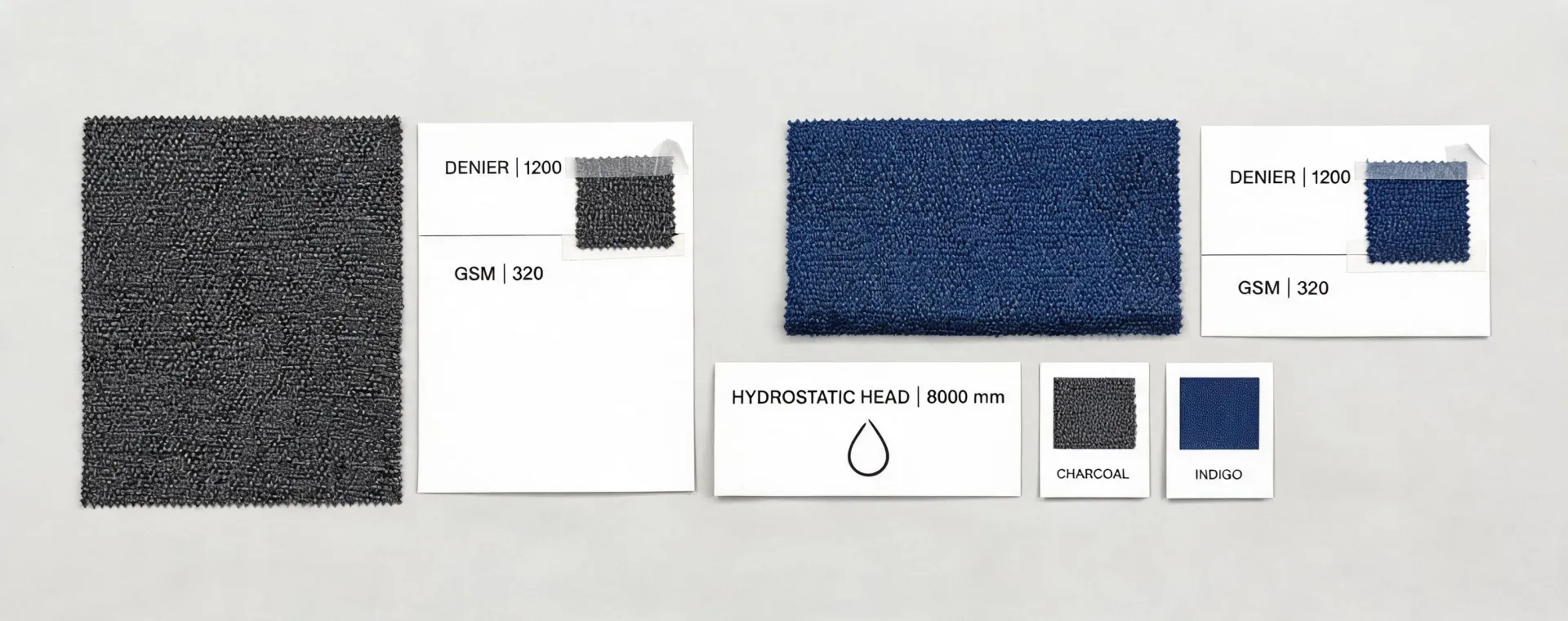
If you're looking for Glen Raven custom fabrics, or if your team needs waterproof fabric wholesale and keeps circling around nylon fabric OEM suppliers, this article is for you.
I manage purchasing for an outdoor and workwear brand. My official title is operations coordinator. In practice, that means I run fabric sourcing, evaluate vendors, and handle the consequences when a production fabric doesn't match the approved sample. I oversee roughly $1.8 million in annual material spend across eight supplier relationships, and I report to both operations and finance. I've made expensive mistakes in this market.
One of those mistakes was assuming that performance fabric OEM vs private label was just a terminology difference. It isn't. It changes who owns the technical specification, which parts of the fabric you can change, and who will be on the hook when your finished product fails in the field.
The Surface Problem: OEM and Private Label Are Not Packaging Options
From a mill's perspective, a private label fabric program usually starts with an existing product. The mill has already solved the engineering problem. You choose color, width, maybe a finish, and the fabric gets badged under your label. That's a legitimate and efficient way to buy technical fabric.
An OEM program, at least when a mill like Glen Raven Mills talks about custom fabrics, usually starts with your end use. The mill can modify weave construction, yarn count, coating, or lamination to hit a performance target you name. The fabric is still yours to sell, but the technical work is tied to your data pack and your intended application.
Both paths have value. The issue is that buyers usually compare them before they have answered a more important question: Which part of the product do we actually need to control?
The Deeper Problem: A Swatch Cannot Show You the System
Here's the reason this topic keeps causing failures. Technical fabric isn't a single material; it's a system of yarn, weave, finish, and sometimes a membrane or coating. A swatch can show you hand feel, color, and weight. It can't show you the process controls that keep coating thickness within range or make a finish compatible with seam tape.
In 2023, a vendor offered us a well-priced waterproof fabric for a new rain cover line. The swatch passed our simple water column test. We assumed that because the spec sheet matched what we used with our existing OEM supplier, production would match too. We didn't verify how the vendor controlled the coating process. The first article passed. The full order failed after seam sealing. The fabric itself met the number we requested, but the surface wasn't compatible with the tape we were using. The layers separated in a field test.
That was my assumption lesson: I assumed same specification meant identical results across suppliers. It didn't. Each mill interpreted a quote line like waterproof coating differently. The visual samples were nearly impossible to tell apart. The process behind each sample was completely different.
What That Ambiguity Costs
The first thing you lose is leverage. If a purchase order says factory standard and no test methods are attached, the supplier has met its obligation even if your finished product fails.
In 2024, we consolidated a waterproof shell program with a new private label supplier. The first commercial roll looked right. Then we found coating peeling at the edges after three wash cycles. We had 11,000 units scheduled for cut-and-sew. We didn't have a formal process for approving supplier quality protocols before the purchase order. The supplier had no contractual duty to address our test, so we paid for replacement material, expedited freight, and a second lab audit. The total overage was about $61,000, and that number does not include the time we lost.
None of this means private label is bad. I use private label for products where we don't need a unique technical story. But if the private label fabric is still the mill's stock item, you are relying on quality controls built for their own catalog. You have to know what those controls are before you sign.
The Short Version of What We Changed
We stopped starting every RFQ with the phrase OEM or private label. We started with the end use and the failure criteria that matter.
- Name the standard. For waterproof materials, reference a test method and minimum value, not a marketing claim.
- Ask who owns the formulation and what happens if the product needs to be adjusted later.
- Define production tolerances for coating weight or another relevant parameter. If a supplier won't publish them, ask why.
- Ask the supplier what they would recommend for this application. A supplier that says a private label or standard construction is enough can save you from buying unnecessary engineering.
I'd rather work with a mill that tells me when I don't need custom development than one that says yes to everything. This is also why conversations with Glen Raven and other technical mills feel more productive now. I describe the application, the failure, and the volume, then ask which route they'd take. Sometimes the answer is a stock construction. Sometimes it's a full custom program.
The takeaway is simple: don't turn OEM vs private label into the first decision. Start with what the product must survive, the test that proves it, and the tolerance you can accept. Then the right fabric program becomes visible.