-
Step 1: Define the end use before the fiber content
-
Step 2: Treat the ripstop fabric catalog as a technical document, not a mood board
-
Step 3: Ask what’s not included in the price
-
Step 4: Set color tolerances before production dyeing
-
Step 5: Agree on what ‘pass’ means for production
-
Step 6: Require a pre-production pilot before bulk
-
If you’re building a chenille fabric specification guide
-
Final thought: the hidden specification is the real risk
Let’s start with one rule: a custom fabric order rarely fails at the loom. It fails in the spec review.
I’m a quality inspector at Glen Raven Mills. I review custom fabric specs for OEM and private label programs—ripstop nylon and polyester, chenille upholstery, coated outdoor fabrics, and other technical textiles. I’m also the person who signs off on samples before they move to production. In 2024 alone, I reviewed 200+ unique specs and rejected more first submissions than I’d like to admit.
Use this checklist when you’re planning a custom fabric run or evaluating a supplier for a ripstop fabric OEM project. If you’re picking a base from a ripstop fabric catalog, or if you need a chenille fabric specification guide for an upholstery launch, these are the same checks I’d run before approving an order.
(I can only speak to B2B production. If you’re a designer buying 50 yards for a short-run collection, some of these steps—especially the pilot run—may be overkill.)
Step 1: Define the end use before the fiber content
If someone says ‘ripstop,’ my first question is: what is the product? Ripstop is a weave structure with a reinforcing grid. It is not one fabric. A 70D nylon ripstop with a clear finish is different from a 500D polyester oxford with a heavy coating, even though both can be called ripstop.
Write down the product, expected service life, and abuse conditions. Three things: what the fabric will touch, what it will carry, and where it will be stored. In that order. The hand sample should come after those answers, not before.
Step 2: Treat the ripstop fabric catalog as a technical document, not a mood board
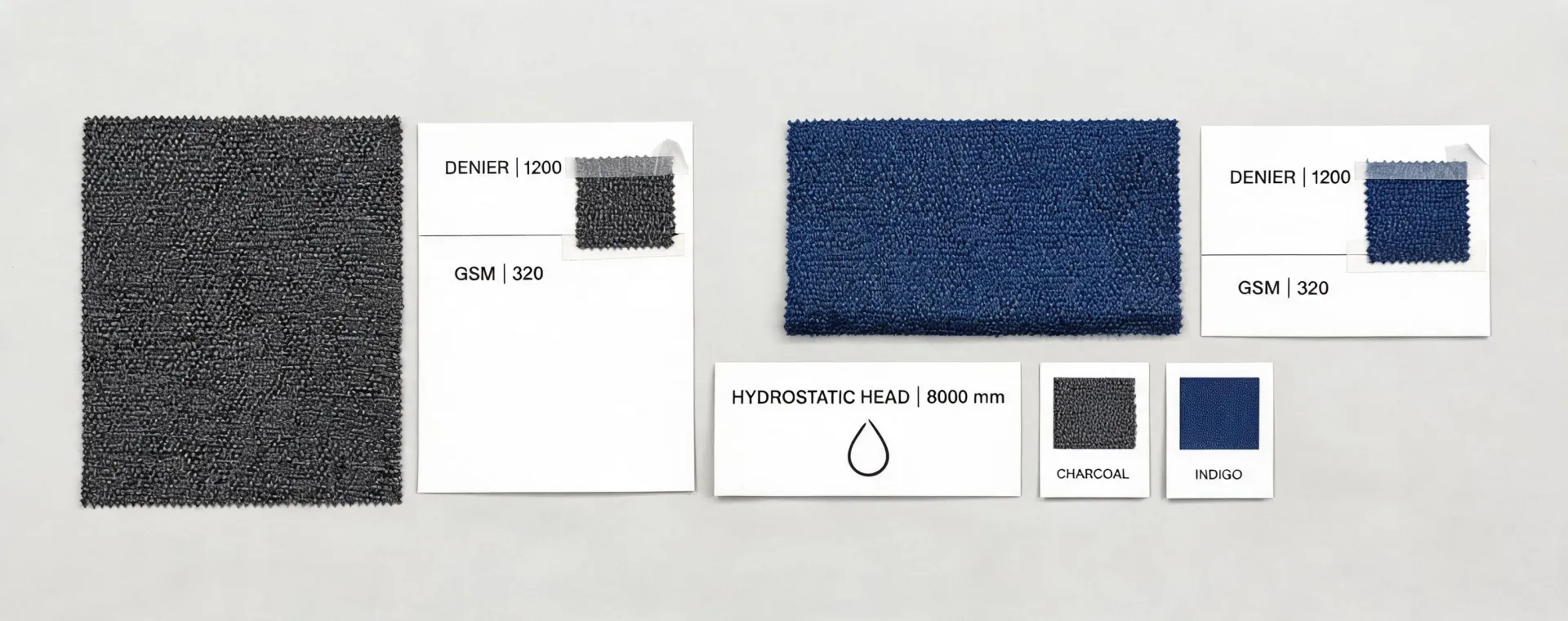
Catalog photos are designed to start a conversation. The spec table is the actual product. If a ripstop fabric catalog lists weight, width, weave, finish, and test data from a named method, that’s a useful starting point. If it only says ‘water resistant,’ ask what that means. If it only says ‘tear resistant,’ ask which test method was used. A number without a test method is not a specification.
At Glen Raven custom fabrics, we often modify a standard base—changing the finish, coating, color, or width. That kind of flexibility is helpful. But every added modification changes at least one thing in the final product. The catalog is a starting point, not an approval.
Step 3: Ask what’s not included in the price
Here’s the thing: I’ve never met a buyer who enjoys hidden setup fees or surprise lab dip charges. The quote looked great until the extra costs arrived. A supplier that says ‘all extras included’ but doesn’t write them down is just delaying an uncomfortable conversation.
Before you approve a custom order, ask about these line items:
- Color matching and lab dips
- Coating, laminating, or finishing costs
- Fire retardant, antimicrobial, or UV stabilizer additives
- Roll width and slitting
- Inspection or test reports
- Sample shipment and courier costs
The vendor who lists all fees upfront—even if the total looks higher—more often than not costs less in the end. I’ve learned to ask what’s NOT included before asking what’s the price.
Step 4: Set color tolerances before production dyeing
Color approval is where many custom fabric projects go sideways. A screen swatch is not enough. A lab dip is a better sign, but it still needs to be evaluated under a controlled light source and compared to an approved physical standard.
For brand-critical colors, we usually work to a Delta E of less than 2. That threshold is not universal, though. On textured fabrics—especially chenille—the surface changes color depending on nap direction. So evaluate the pile in multiple directions and under the same lighting your customer will use.
The third time we had a shade mismatch, I finally added a formal shade approval clause to our contract. Should have done it after the first time. The clause states that production rolls must fall within the approved tolerance range, not just ‘look close’ to the sample.
Step 5: Agree on what ‘pass’ means for production
This is the step that prevents the ‘within industry standard’ argument. For coated ripstop, include hydrostatic head, coating adhesion, tear strength, and any finish durability requirements. For chenille, include abrasion resistance, pilling, pile retention, and seam performance where relevant. If the test method isn’t specified, the result is open to interpretation.
In Q3 2022, we had a coated ripstop program where color, weight, and tear strength were approved. Coating adhesion was discussed, but it wasn’t written as a pass/fail requirement. The fabric looked good in roll form and then failed in the end-use test. Both sides absorbed the cost. That lesson changed how I write every custom fabric spec.
Step 6: Require a pre-production pilot before bulk
There is a meaningful difference between a small sample and a production run. This is especially true for ripstop fabric OEM programs that involve coating, laminating, or finishing. A hand sample can look perfect while the production line produces a slightly different hand, shade, or roll width.
Ask for a pilot roll run on the same production equipment that will make the bulk order. Inspect it for shade continuity, finish uniformity, width, roll quality, and final hand feel. If the mill says a pilot isn’t possible, ask why before you send a larger purchase order.
If you’re building a chenille fabric specification guide
Chenille is a different animal. It is not a high-tenacity performance weave; it is a pile fabric. A chenille fabric specification guide should include pile length, pile density, twist, backing construction, finished width, and care requirements. Abrasion and pilling tests are not optional for upholstery-grade chenille.
Don’t evaluate chenille only by hand feel or color. The surface can appear lighter or darker depending on how the fabric is brushed or napped. If the spec doesn’t mention pile direction, you’re leaving a lot of visual variation to chance.
Final thought: the hidden specification is the real risk
Look, I’m not saying every supplier hides costs or changes specs. I’m saying every production run should be transparent enough that neither side needs to guess. The best fabric supplier is the one who pushes back before promising. A salesperson who says yes to every modification is often more expensive than an honest ‘no.’
Weight, width, construction, finish, color, coating, acceptance criteria, pilot. In that order. That’s the checklist I use. If you use it before signing off, you’ll avoid the expensive surprises that usually show up after the first production shipment.