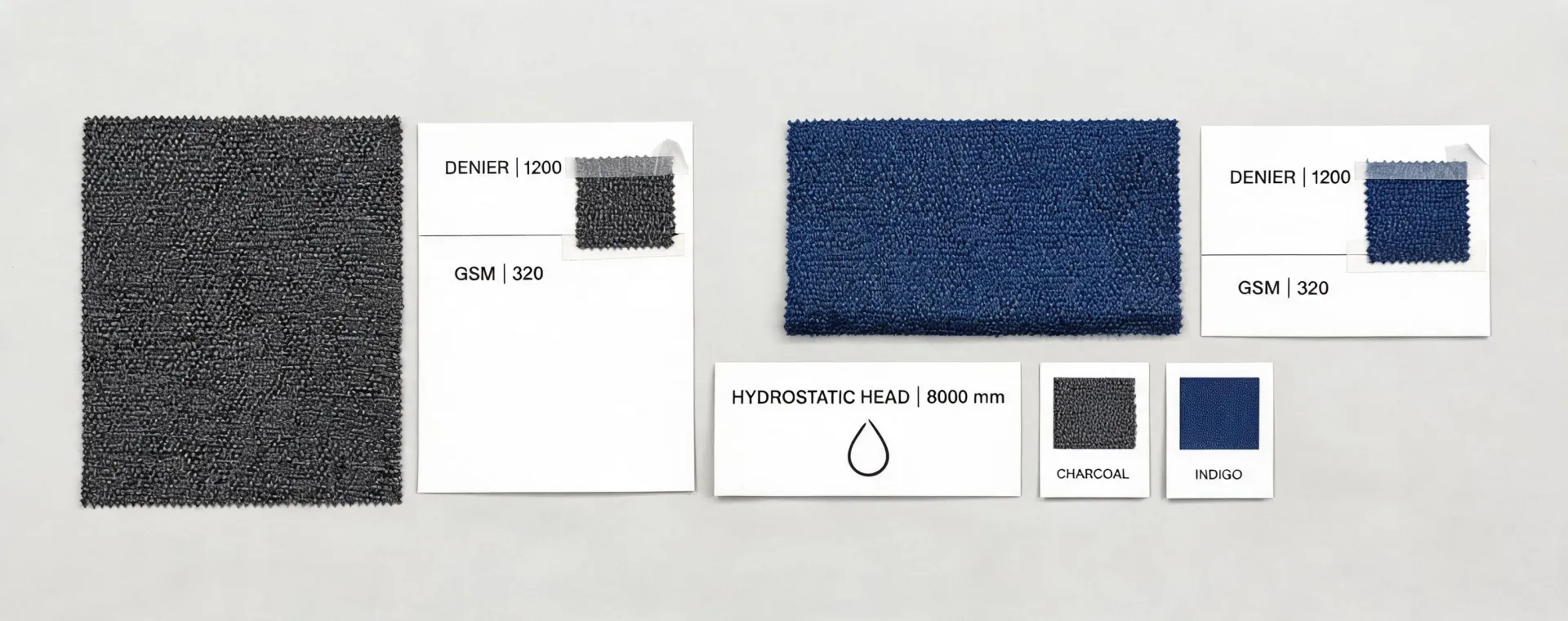
Most fabric problems are solved before the purchase order goes out—not after the fabric lands in your warehouse. I know that sounds like a line from a compliance seminar. What I mean is: if you're a B2B buyer and you skip the pre-order checks, you're not avoiding work. You're just moving that work to the rework table. I run procurement for a mid-size outdoor furniture company and currently manage around $780,000 in annual fabric spend. I've tracked every fabric order in our cost system for six years, and the expensive mistakes were never the ones I caught early. They were the ones I rushed because I wanted to save a week. That's why my position is simple: prevention over cure. I'd rather over-vet a ripstop fabric manufacturer than eat a failed order.
The Expensive Way to Learn About Waterproof Fabric Wholesale
In 2023, we moved a waterproof fabric wholesale order to a different supplier because the quote was 18% lower. Eighteen, not twenty—I remember because it was just under the threshold that required a second approval. The spreadsheets said switch. My gut said the opposite. They were slow to answer questions about hydrostatic head specs, and when I asked for lot-specific test data, they sent a generic PDF. I overruled my gut because the numbers were good.
That order failed our third-party water column test at about 75% of the agreed spec. The fabric looked fine until we tested it. We had already cut 1,400 seat cushions. The labor, shipping, and replacement material cost us around $13,000. Maybe $13,500, I'd have to pull the job code—plus three weeks of delay. (Should mention: that supplier may be great for someone else. We were a bad match because our spec was tighter than their process was built for.) The price was cheapest only if you ignore the fourth week.
The direct cost hurt. The bigger cost was that our production team lost confidence in the sourcing process. That's a hidden line item no one puts in a price comparison.
Why I Check the Mill Before I Check the Number
People think higher-priced fabric mills charge more because they add margin. In textile manufacturing, that's usually backwards. A ripstop fabric manufacturer that can hold tight tolerances can charge more because they don't burn through customer rework. The causation runs the other way: quality allows the pricing, not the other way around. If a mill can't hold a consistent width or coating weight, the real cost shows up in your cutting room, not their invoice.
I'm not saying buy premium every time. I'm saying the price per yard is incomplete until you know what the mill's tolerances will do to your yield, cut schedule, and warranty claims. When a potential ripstop fabric manufacturer sends me a price list, I ask four questions before I ask for terms:
- What are your tolerances on weight and width? If a mill quotes wider than ±2%, our cutting yield drops. We need to know before we order.
- Which coating line will run this finish? Waterproof fabric wholesale orders can be coated on different lines. If they can't name the line, they don't know their own process.
- Will I get lot-specific test data? A generic data sheet is way less useful than a roll-specific report. I want the results, not a brochure.
- What happens when a lot fails inspection? If the answer is 'we'll make it right,' ask for it in writing. The contract language matters more than the apology.
When we review Glen Raven Mills, we don't treat the name as a shortcut. We treat it as the beginning of the same checklist. We've looked at Glen Raven custom fabrics for several programs, and their technical team answers in specifics—coating type, data, lead time. That's the kind of signal that makes a supplier easier to approve. But the signal only matters if you ask the same questions of every source.
Another reason I check the mill first is that 'wholesale' doesn't mean 'standard.' A waterproof fabric wholesale quote may be based on a production run that fits their schedule, not yours. If your minimum order is 3,000 yards and their optimal run is 10,000, you'll get a different price than the one in the brochure. Ask about run size, lead time, and whether there is a standard roll width for your cut pattern.
What an Outdoor Furniture Fabric Distributor Buying Guide Should Tell You
If you need an outdoor furniture fabric distributor buying guide, the checklist shifts a little. You still need the mill's data, but you also need to know what the distributor adds. Ask who does the testing: the mill, the distributor, or a third party. If the distributor just passes through the fabric, get the mill's test report. If they add a QC step, ask for their records too.
A true distributor can also tell you whether a fabric is a regular production item or a one-off buy. That matters for reorders. Last year we almost approved a distributor because the sample was perfect. When I asked about reorder compatibility, they admitted the exact dye lot had been discontinued. Not a scam—just a product that wouldn't repeat. The sample was real; the supply chain wasn't.
Oh, and one more thing we always ask: 'Do you cut from finished rolls or greige?' If a supplier ships greige to a finisher, you inherit coating inconsistency in transit. We learned that one from a distributor who caught it before we did. Plus, that question separates sourcing people who know their process from people who just move boxes.
When I look at a distributor quote, I calculate total landed cost per yield-usable yard—not per quoted yard. That includes freight, customs if needed, storage, and expected waste. A fabric that is two inches narrower may seem like a small difference, but on a 1,000-yard cut, it can mean one extra roll of waste. That's the hidden cost nobody shows on the quote.
The Counterargument: 'You Can't Check Everything'
The counterargument I hear is 'you can't check everything.' True. We don't audit every mill twice a year. We use risk-based checks. First orders get a pre-production sample and a small test cut. Repeat orders get verification only when we change the spec or the price changes drastically. The point is to make the check a line item in the process, not a speed bump we're trying to avoid.
This approach worked for us, but our situation is repeatable SKUs and year-round production. If you're a seasonal business with demand spikes, the calculus might be different—you'll need to parallel process, not serialize. That's a real tradeoff. But even then, the prevention part doesn't disappear. It just moves to the front of the season.
As of Q4 2024, our cost system shows we spend about 4% of total fabric spend on testing and pre-production samples. In 2023, before we tightened the process, that number was 1.5%, and the rework line was much higher. I'd rather pay 4% up front than a failed order in the middle. That's not a ton of money in fabric terms, but it's a lot when no one planned for it.
Bottom Line: Prevention Is Procurement Too
Bottom line: in fabric sourcing, 'cheap' is not a property of the price. It's a property of the total cost over time. Prevention is expensive until you compare it to rework. I'd rather spend a week evaluating a ripstop fabric manufacturer—or checking whether Glen Raven custom fabrics meet our spec—than spend a month explaining why a container of fabric is not usable. The 10-minute check is the cheapest insurance we have.
That's my opinion, and I'm sticking to it. If you disagree, I'll be in the cutting room. Bring snacks.