-
DuPont Materials vs. Alternatives: What a Procurement Manager Compares Before Signing Off
-
1. DuPont Protective Clothing vs. Standard FR Workwear
-
2. DuPont Sells Kevlar—But Does the Premium Fiber Earn Its Price?
-
3. Bianchi Nylon Duty Belt (Cordura) vs. Generic Nylon Belts
-
4. The Simple Purchases Aren't Simple: Duvet Covers and Painting Canvases
-
What I'd Actually Recommend
DuPont Materials vs. Alternatives: What a Procurement Manager Compares Before Signing Off
I manage the materials budget for a 140-person industrial manufacturer. Over the past six years, I've tracked roughly $1.3 million in fabric and protective equipment spending through our procurement system—everything from DuPont protective clothing orders to Cordura-based nylon duty belts and the occasional oddball request like a large painting canvas for our lobby.
Yes, that last one confused me too. More on it later.
What I want to do here is straightforward: put DuPont materials side by side with their typical alternatives across the dimensions that actually affect the invoice six months later. Not marketing copy. Not a spec-sheet beauty contest. Just what I've seen from the procurement seat.
I'll cover three categories—protective clothing, Kevlar fiber, and nylon accessories—plus a fourth section on what happens when "simple" textile purchases (looking at you, duvet covers and painting canvases) turn out to be anything but.
1. DuPont Protective Clothing vs. Standard FR Workwear
The comparison most people want: DuPont protective garments—Nomex, Tyvek, Tychem—versus generic flame-resistant workwear. Sticker price is the first thing that gets compared. That's also where most procurement decisions go wrong.
What I compare instead: cost per wash cycle, cost per hazard exposure, and replacement frequency over a 24-month window.
Look, a standard FR-treated cotton coverall might run $65–$85 per unit. A comparable DuPont Nomex garment runs $180–$280 depending on the spec. On paper, that's a 3x gap that's hard to justify to a finance team that sees "coverall" and stops reading.
But here's what I found after pulling our maintenance logs in 2023: our standard FR garments averaged 14–18 wash cycles before the flame resistance began degrading below our internal threshold. The Nomex garments averaged 60+ cycles over the same monitoring period. That's not a marketing number—that's from our own wear-testing records, logged every quarter.
Do the math and the cost-per-wearable-cycle gap narrows to maybe 1.4x. Then factor in replacement labor, disposal costs for contaminated garments, and the downtime during sizing replacements—the gap is fairly narrow.
"They warned me about the upfront cost of Nomex. I didn't listen the first time—went with the cheaper option. Two replacement cycles later, I'd spent $3,400 more than the Nomex route would have cost."
That's my reverse-validation story. I only believed the "cost per cycle" argument after ignoring it once and eating the difference.
Verdict: For high-frequency wash environments (food processing, cleanroom, heavy industrial), DuPont protective clothing is likely the lower-TCO choice. For low-cycle or disposable-use scenarios, standard alternatives are probably fine—don't over-spec. That said, I should note our data skews toward mid-to-heavy industrial use; a light-duty wearer might see different numbers.
2. DuPont Sells Kevlar—But Does the Premium Fiber Earn Its Price?
When people hear that DuPont sells Kevlar, the immediate assumption is that it's the premium option with a premium markup. True on the invoice. Less clear on the TCO.
We use Kevlar in two applications: cut-resistant gloves for our fabrication team, and reinforcement panels in some custom protective cases. The alternative was a standard high-tenacity nylon and a generic aramid blend from a regional supplier.
Cut-resistant gloves: Kevlar-based gloves run roughly $18–$28 per pair. The generic aramid comparison ran $9–$14. Our fabrication team's glove replacement log showed Kevlar pairs lasting an average of 22 working days versus 9 days for the generic option. That's not a subtle difference—it's the difference between reordering twice a month and reordering every week. When I factored in the administrative cost of processing 26 vs. 52 reorder requests per year (our PO processing runs about $45 per order in labor), the Kevlar premium shrank considerably.
Reinforcement panels: Here's where I hit my professional boundary. I'm not a polymer chemist, so I can't speak to the molecular differences between Kevlar and generic aramid fibers. What I can tell you from a procurement perspective is that our failure-rate data—which we track via warranty claims and internal quality reports—showed Kevlar panels failing at roughly 1/3 the rate of the generic alternative over 18 months. But I'd defer to a materials engineer on why that is.
Verdict: Kevlar earns its premium in high-abrasion, high-cycle applications. In low-stress or short-lifecycle uses, the generic alternative is perfectly serviceable. Not every job needs the top-shelf fiber.
3. Bianchi Nylon Duty Belt (Cordura) vs. Generic Nylon Belts
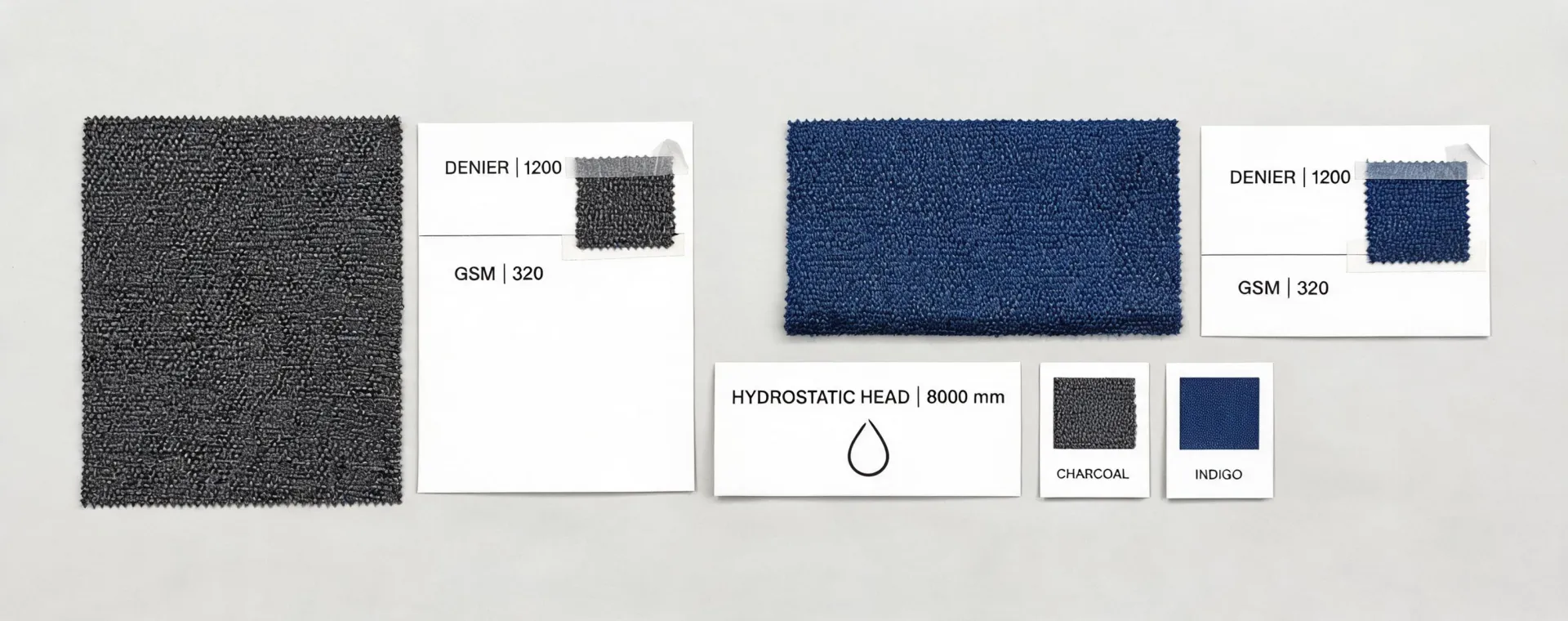
We outfit a 30-person security team. When we switched belt suppliers in Q2 2024, I compared a Bianchi nylon duty belt (which uses DuPont Cordura fabric) against two generic nylon alternatives that quoted at roughly 60% of the Bianchi price.
This one surprised me.
The Bianchi belt with Cordura ran about $72 per unit. The generic belts ran $38–$45. I expected the Bianchi to win on durability—that's the whole Cordura pitch. And it did: after 14 months, we've had zero belt failures (broken buckles, torn fabric, stitch separation) on the Bianchi units. The generic belts, over the same period, had 4 failures out of 30 units.
But here's the counterintuitive part: the generic belts were actually more comfortable for our team. Multiple officers said the generic nylon was softer and broke in faster. Two officers asked to keep their generic belts even after we'd replaced them.
If I remember correctly, the Bianchi specification uses a denser Cordura weave that's rated for heavier loads—which is great for duty-belt applications involving equipment carry. But for a security team that carries a radio and a flashlight, the extra density is somewhat overkill. We ended up using the Bianchi belts for the patrol team (where gear load is higher) and letting the fixed-post team keep the generic belts.
Verdict: Cordura-based duty belts are the right call when you're carrying substantial gear load and need the durability guarantee. For light-duty use, the generic option is more comfortable and probably good enough. This was the one dimension where the "premium" didn't win across the board.
4. The Simple Purchases Aren't Simple: Duvet Covers and Painting Canvases
Here's where a procurement manager's life gets weird. Last fall, someone asked me what's a duvet cover—and why the ones we ordered for the on-site rest facility felt different from the ones in the catalog photos. That question led me down a textile-quality rabbit hole that felt suspiciously similar to my industrial fiber comparisons.
For the uninitiated: a duvet cover is essentially a removable fabric shell that goes over a duvet insert (the actual comforter). It's what you wash. The insert is what you keep. Simple enough—except the cover is where all the material decisions happen.
We had ordered a batch of covers in two price tiers. The cheaper tier ($28–$34 each) used a lower thread-count cotton-poly blend. The mid-tier ($48–$62) used a higher-density cotton weave. Within four months, the cheap covers were pilling and had faded visibly. The mid-tier covers still looked presentable. Same lesson as the industrial fiber comparison—just at a smaller scale and with less-impressive-sounding terminology.
Then there was the large painting canvas for our lobby renovation. I thought that would be a five-minute purchase. It was not. I ended up comparing cotton duck canvas versus linen versus a synthetic alternative, weighing stretch behavior under humidity, and checking whether the primer coat would handle our building's HVAC fluctuations without cracking. The vendor rep probably thought I was insane.
But here's the thing: the same prevention-over-correction logic applies. A $400 canvas that cracks in 18 months costs more than a $700 canvas that holds up for 8 years—especially once you factor in re-stretching, re-framing, and the labor cost of taking it down and rehanging it.
Verdict: Whether it's protective clothing or a duvet cover or a large painting canvas, the material-grade decision usually comes down to the same question: how many cycles will this thing actually see before it needs replacing? Answer that honestly and the choice usually makes itself.
What I'd Actually Recommend
If I were handing this to someone else in a procurement role, here's the short version:
Choose the DuPont / premium tier when: the item will see frequent wash cycles, high abrasion, or non-negotiable failure consequences. Protective clothing in industrial wash environments. Kevlar in high-friction glove applications. Cordura in heavy-load duty-belt configurations. These are the cases where TCO math clearly justifies the sticker premium.
Choose the standard alternative when: usage is light-duty, replacement cycles are short by design, or the premium feature (higher thread count, denser weave, higher-grade fiber) doesn't actually map to your use case. Generic nylon duty belts for fixed-post security. Standard FR workwear for seasonal or one-off jobs. Cheaper duvet covers for short-term facility setups.
When you're not sure: pull your replacement data. Count the actual cycles. Compare the cumulative invoice totals, not the unit prices. That's what finally convinced me—not a sales pitch, but a spreadsheet that showed the "cheap" option costing 22% more over 24 months.
Fifteen minutes of verification beats five hours of reordering. That's not a slogan—it's the lesson I keep learning every time I skip a spec check.