-
Is Glen Raven a breathable fabric manufacturer, or just a familiar name in outdoor fabrics?
-
What does breathable actually mean when I am comparing outdoor fabric OEM quotes?
-
What are breathable fabric compliance requirements I should verify before ordering?
-
Is Glen Raven Custom Fabrics right for small OEM runs, or should I look elsewhere?
-
How do I compare a low quote against Glen Raven or another breathable fabric manufacturer?
-
What should be in a custom fabric spec for an outdoor OEM program?
-
Can Glen Raven Mills support private-label and wholesale programs?
-
What do buyers get wrong about breathable outdoor fabric?
I handle procurement for a 180-person company that builds private-label outdoor gear and uniforms. We do not make fabric. We buy it, and I manage about $260,000—maybe $280,000—a year across eight mills and converters. So when people ask me about Glen Raven, Glen Raven Mills, or whether they should use Glen Raven custom fabrics for an outdoor fabric OEM program, I get it. The questions are usually the same.
Here is what this FAQ covers:
- Is Glen Raven a breathable fabric manufacturer or just a familiar name?
- What does breathable actually mean in an outdoor fabric OEM spec?
- What are the breathable fabric compliance requirements I need to verify?
- Is Glen Raven Custom Fabrics right for small runs?
- How do I compare a low quote against total cost?
- What belongs in a custom fabric spec?
- Can Glen Raven Mills support private-label and wholesale programs?
- What do buyers get wrong about breathable outdoor fabric?
Is Glen Raven a breathable fabric manufacturer, or just a familiar name in outdoor fabrics?
Both, depending on how you define it. Glen Raven is a textile manufacturer, and Glen Raven Mills has a long history in performance and technical fabrics. Glen Raven Custom Fabrics is the part most OEM buyers, distributors, and wholesale procurement teams end up talking to when they need custom color, finish, backing, or private-label development.
But here is the catch: not every Glen Raven fabric is breathable, and not every breathable fabric is waterproof. Those are different performance claims. If you need a breathable fabric manufacturer for outerwear, a softshell, a hardshell, or an upholstery application, you still have to spell out the end use and the test method. I learned that the hard way in 2022, when I assumed 'breathable' meant the same thing to every mill. It does not.
What does breathable actually mean when I am comparing outdoor fabric OEM quotes?
It depends on the product. For apparel and outdoor gear, breathability usually means moisture vapor transmission, often tested with ASTM E96 or a related method. For upholstery or non-apparel textiles, it may mean air permeability, such as ASTM D737. Those numbers do not compare unless the test method, temperature, humidity, and fabric construction are the same.
I have seen two suppliers quote the same 'breathable nylon oxford' and sound identical. One was measuring air flow. The other was measuring moisture vapor. To a buyer, it looked like an apples-to-apples quote. It was not. Ask for the test report, not just the word breathable. If a vendor cannot show the method and the result, you do not have a spec. You have a slogan.
What are breathable fabric compliance requirements I should verify before ordering?
It depends on where you sell. In the U.S., performance and environmental claims fall under FTC rules. Per FTC advertising guidelines (ftc.gov), claims must be truthful, not misleading, and substantiated with evidence. If a fabric is marketed as recyclable, the FTC Green Guides say that claim should be backed by access to recycling for at least 60% of consumers where the product is sold. For children's products, CPSIA and state rules like California Prop 65 may apply. In the EU, REACH SVHC and other chemical restrictions matter.
I do not have hard data on how many suppliers send outdated certificates, but anecdotally, I would say about one in ten certificate packets we receive is expired, scoped to a different fabric, or missing the lab report. That is not a reason to panic. It is a reason to verify before you cut a purchase order. Ask for current certificates, test reports, and a written statement of which fabric and finish they cover.
Is Glen Raven Custom Fabrics right for small OEM runs, or should I look elsewhere?
The conventional wisdom is to go straight to the mill for the best price. My experience with small runs suggests otherwise. Large mills, including Glen Raven, are built for meaningful volume. If you need 300 yards of a custom breathable fabric, your program may not be a fit for a direct mill relationship. A converter or distributor may be faster and more flexible.
We use Glen Raven for programs over 3,000 yards, where the volume can absorb setup, testing, and shipping. Below that, we usually go through a converter. That is not a knock on Glen Raven. It is just how capacity works. Looking back, I should have asked about minimums earlier in my first outdoor fabric OEM project. At the time, I assumed a large manufacturer would be happy to quote anything. They were polite, but the minimum was nowhere near our run size.
How do I compare a low quote against Glen Raven or another breathable fabric manufacturer?
Do not compare the line-item price. Compare total cost. That includes base fabric, setup fees, minimum order quantity, shipping, duties, testing, warehousing, rework, and the cost of a late or failed delivery.
In 2023, we saved about $0.40 per yard on an 8,000-yard order. That was roughly $3,200. The fabric passed the first sample, but the production lot had inconsistent coating adhesion. We had to rework two finished batches, air-freight replacement yardage, and issue customer credits. The final hit was around $11,000. That $3,200 savings turned into an $11,000 problem. Not every low quote does that. But in my experience, the lowest quote has cost us more in maybe 60% of cases. I wish I had tracked that number more carefully, so treat it as an estimate, not a benchmark.
What should be in a custom fabric spec for an outdoor OEM program?
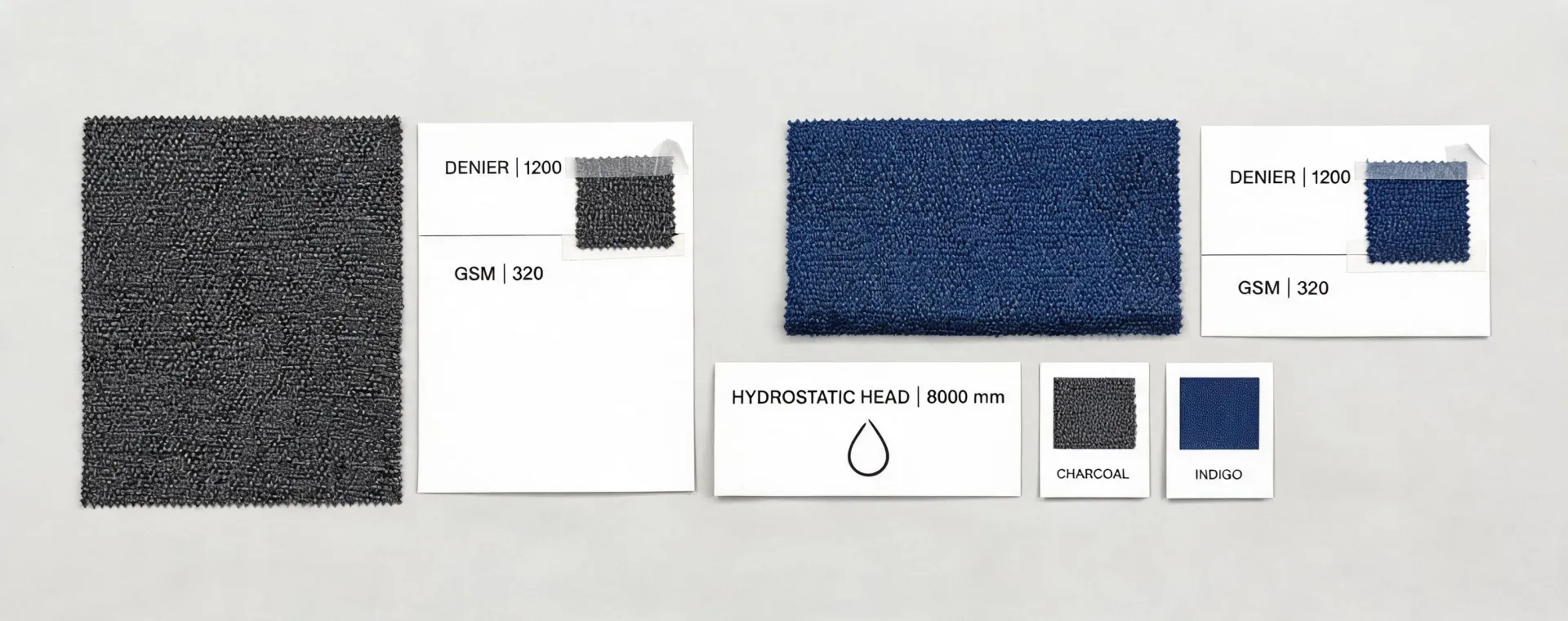
At minimum: end use, fiber content, construction, weight, width, colorfastness requirements, abrasion, hydrostatic head if relevant, moisture vapor transmission or air permeability if breathable, finish, backing, chemical restrictions, labeling, packing, and traceability. Add the test method for every performance claim. If you need private label, include branding, packaging, and documentation requirements.
Also ask for a pilot run. A lab sample is useful. A pilot run shows whether the mill can reproduce the sample at production speed. We now require a signed spec sheet and a retained sample before bulk. It adds about three weeks, or rather closer to four when you count the testing cycle. That delay has saved us at least twice.
Can Glen Raven Mills support private-label and wholesale programs?
From what I have seen, yes. Glen Raven Custom Fabrics works with OEM and private-label buyers, and the company has wholesale and bulk supply capability across a broad technical fabric portfolio. That said, private label is not a magic switch. You still need to define the fabric, the finish, the color standard, the packaging, and the compliance file. The more you can specify upfront, the fewer surprises you get later.
If you are a distributor or procurement team, ask about minimums, lead times, color approval, and whether your target fabric is a stock construction or a custom development. Those four questions will tell you more than a general capabilities brochure.
What do buyers get wrong about breathable outdoor fabric?
They treat breathability as a checkbox. It is not. A fabric that breathes well may not be waterproof enough for your end use. A fabric that keeps water out may not move moisture the way your customer expects. Compliance is the same way. A certificate is not a strategy. You need the right certificate for the right market, fabric, and claim.
My rule is simple: buy for the program, not for the line item. If the quote looks too good, ask what is missing. It is usually testing, traceability, consistency, or support. Price matters. Total value matters more.