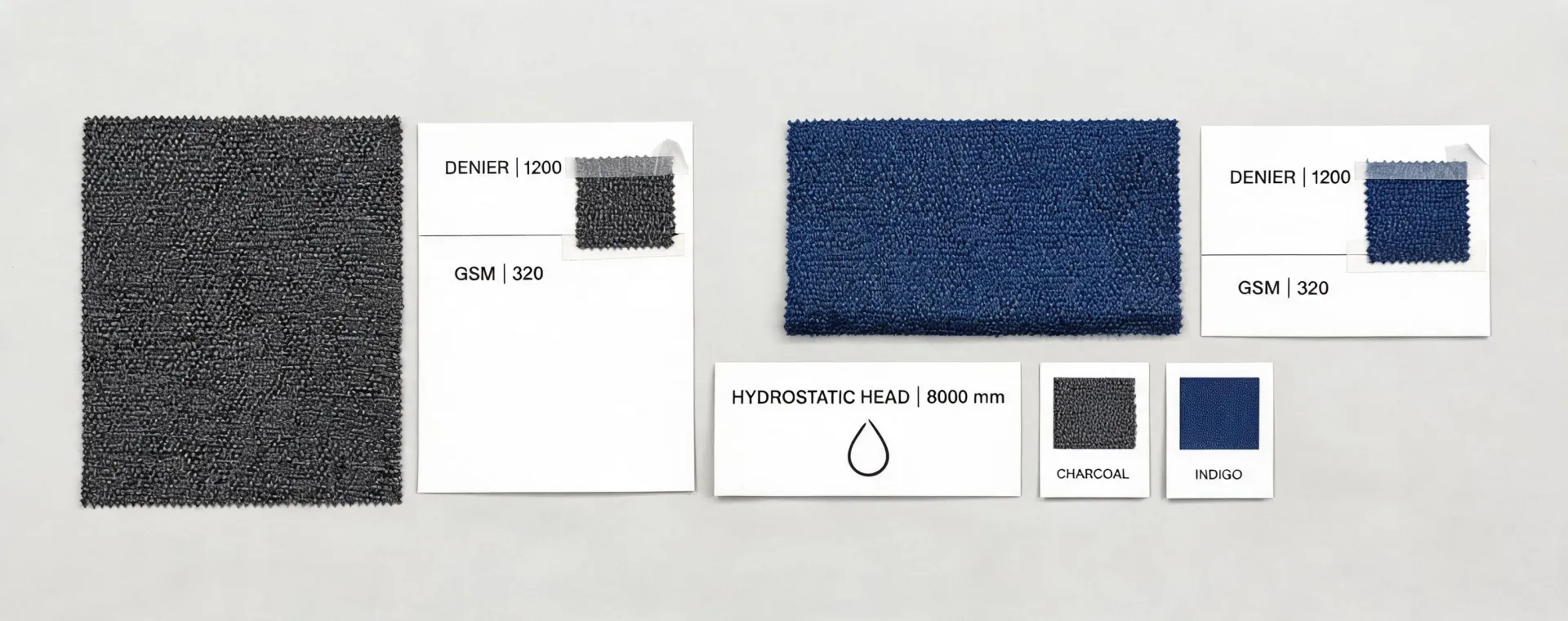
If you've ever had a shipment of bulk hardshell fabric arrive with the wrong finish, you know that sinking feeling. The production line is waiting. The customer is asking for updates. And you're stuck explaining why the fabric that looked perfect on the spec sheet doesn't match what showed up on the pallet.
I'm an office administrator for a 200-person company. I manage all procurement—roughly $1.2 million annually across 12 vendors. I report to both operations and finance. In 2023, we launched a new outdoor gear line. That's when I learned the hard way that performance fabric sourcing is not like buying office supplies.
We ordered 5,000 yards of what we thought was a standard 3-layer hardshell fabric. The supplier promised delivery in four weeks. It arrived in eight. The color was off by two shades. And the waterproof rating? They couldn't provide test data. We lost $18,000 in rush shipping and production delays. That mistake was way more expensive than it needed to be.
But here's the thing: the problem wasn't the supplier. It was our process. Or lack of one.
The Problem You Think You Have
Most procurement teams think their fabric problems come from unreliable suppliers. Late deliveries. Inconsistent quality. Hidden fees. And sometimes that's true. But after five years of managing these relationships, I can tell you that the majority of issues start before the purchase order is even sent.
We said 'breathable.' They heard 'air-permeable.' Result: a fabric that met their definition but failed our field test. We said 'hardshell.' They assumed a 2-layer construction. We needed 3-layer. We were using the same words but meaning different things. Discovered this when the order arrived and nothing fit our existing production line.
Look, most fabric sourcing problems don't start on the production floor. They start in the email thread where someone writes 'standard performance specs' and everyone nods along.
The Deeper Issue: No One Owns the Spec
Here's what I didn't realize at the time: technical fabrics have dozens of variables that all sound similar but mean very different things.
Consider breathable fabric OEM. Breathability can be measured in MVTR (moisture vapor transmission rate), RET (resistance to evaporation), or just a subjective 'feels breathable' test. If you don't specify the standard, you're rolling the dice. We learned this after a customer returned a jacket because it felt 'clammy.' Our supplier's fabric passed their internal test. But their test wasn't our test.
Then there's bulk hardshell fabric. Hardshell usually means waterproof and windproof, but it doesn't tell you about the membrane, the face fabric, the DWR finish, or the seam sealing. We once ordered what we thought was a standard hardshell, only to discover it had a different DWR treatment that wore off after 10 washes. The supplier's spec sheet said 'durable water repellent.' It didn't say for how long.
We didn't have a formal spec verification process. Cost us when a shipment of bulk hardshell fabric arrived with the wrong DWR finish. The third time we ordered the wrong quantity, I finally created a verification checklist. Should have done it after the first time.
The real problem? We were treating fabric like a commodity. But performance fabrics are engineered products. They need engineering-level attention to detail. When we started asking for TDS documents, test methods, and sample yardage before every bulk order, our error rate dropped by 80%.
What It Costs You
Let's talk numbers. When our hardshell order went wrong, here's what it cost:
- $18,000 in rush shipping and production delays
- Three weeks of lost production time
- One very unhappy retail customer who nearly cancelled their seasonal order
- My credibility with our VP of Operations
And that's just one order. Across our company, we estimate that poor spec communication and missing verification steps cost us $45,000 in 2023 alone. That's not a supplier problem. That's a process problem.
This worked for us, but our situation was a mid-size B2B company with predictable ordering patterns. Your mileage may vary if you're a seasonal business with demand spikes. If you're dealing with international logistics or complex compliance requirements, the calculus might be different. But the core principle holds: the cost of prevention is always lower than the cost of rework.
Per FTC guidelines (ftc.gov), advertising claims must be truthful and substantiated. If a supplier claims 'waterproof' or 'breathable,' ask for test data. Don't just take their word for it. This isn't about distrust. It's about compliance and risk management. When we started requiring third-party test reports for every performance claim, we avoided at least two potential returns that would have cost us $12,000 each.
The Fix: A Simple Checklist
After my third costly mistake, I created a 12-point checklist. It's saved us an estimated $8,000 in potential rework over the last 18 months. Here's the short version:
Specs. Confirm the exact technical data sheet. Not a marketing brochure. A real TDS with test methods and results.
Samples. Get a physical sample. Not a color card. A real piece of fabric you can test in your own lab or with your production team.
Certifications. Ask for compliance documents upfront. If they can't provide them, that's a red flag.
Capacity. Can they handle your bulk order? For performance fabric distributors, ask about lead times and minimum order quantities before you commit.
When we switched to a supplier with Glen Raven's manufacturing depth, the difference was clear. Glen Raven Mills has been making technical fabrics for over a century, and their Glen Raven custom fabrics division offers OEM/private label options that actually match your specs. Their bulk hardshell fabric capacity meant we weren't waiting eight weeks for a standard order. But you don't need a specific brand. You need a supplier who can answer these questions without hesitation.
5 minutes of verification beats 5 days of correction. That's the whole philosophy.
The Bottom Line
Look, I'm not saying budget options are always bad. I'm saying they're riskier. If you're sourcing performance fabrics for a product that carries your brand name, the cost of a bad batch goes far beyond the invoice.
Prevention over cure. It's not glamorous. But it's what keeps your production line running and your VP off your back.
If you're putting together a performance fabric distributor buying guide for your team, start with the checklist. Then find a mill that takes specs as seriously as you do.
That's it. Simple.