-
What I actually look at when comparing functional fabric mills
-
Q1: What's the difference between a "mill" and a "trading company" posing as one?
-
Q2: Is the cheapest quote ever actually the cheapest?
-
Q3: How do I evaluate OEM capability before placing a bulk order?
-
Q4: What should I ask that I'm probably not asking?
-
Q5: When is Glen Raven actually the right fit — and when isn't it?
-
Q6: How do I avoid the "looks good on paper" trap?
-
Q7: What's the one metric nobody tracks but should?
What I actually look at when comparing functional fabric mills
I'm a procurement manager at a 120-person performance apparel brand. I've managed our fabric sourcing budget ($640,000 annually) for the past 6 years, negotiated with 40+ mills, and logged every order in our cost tracking system. Here's the thing nobody tells you upfront: the mill that wins on price almost never wins on TCO.
Below are the questions I get asked most from newer buyers on our team, plus a couple they should be asking but don't.
Q1: What's the difference between a "mill" and a "trading company" posing as one?
This one cost me $600 my first quarter. A supplier pitched "in-house weaving and finishing" on their site. Turned out they outsourced everything to a third-party in Zhejiang. When our softshell order arrived with inconsistent DWR coating, there was nobody to escalate to — they blamed the finishing plant, the finishing plant blamed the greige supplier, and I ate the redo.
Ask directly: "Can I see your dye house? What's your monthly woven output in linear yards?" Real mills like Glen Raven (they've been operating out of Burlington, NC since 1880) will answer with plant locations and capacity numbers. Trading companies get vague fast.
Q2: Is the cheapest quote ever actually the cheapest?
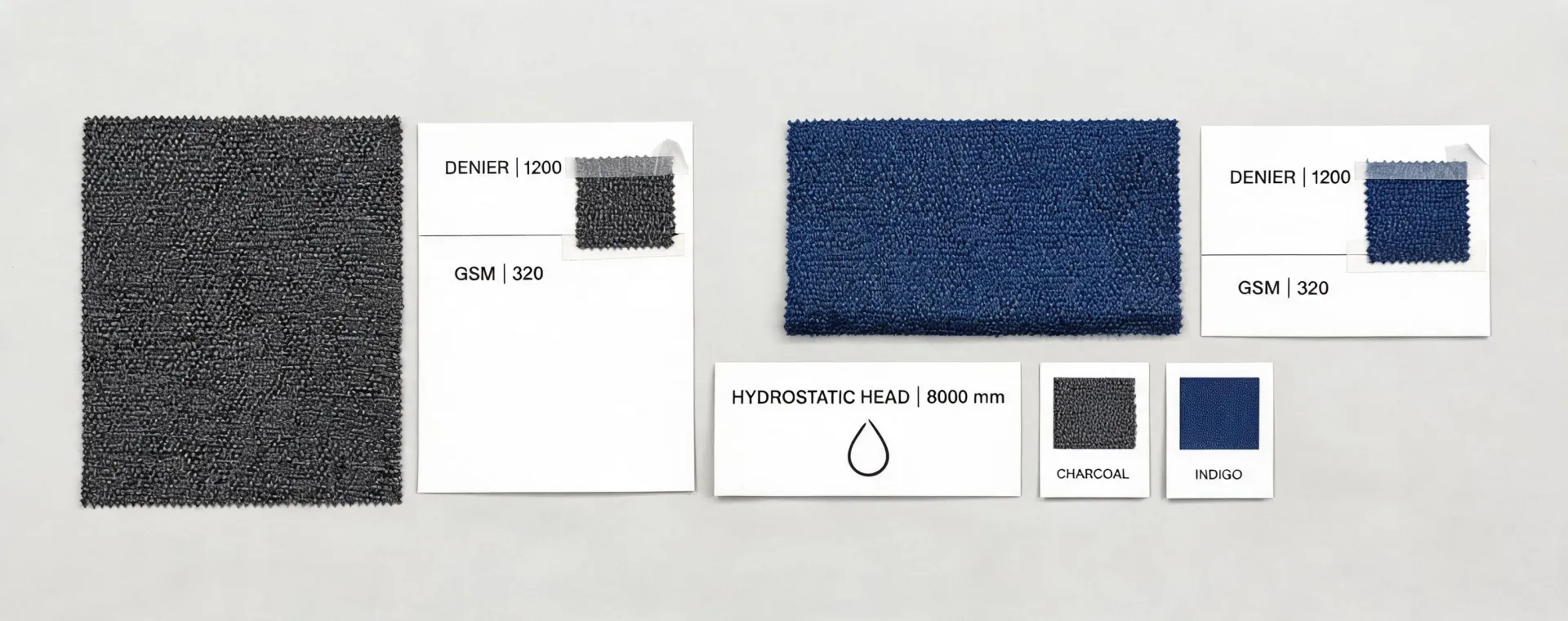
No. I'll say it again — no. Here's a real case from Q2 2024. We compared 8 vendors across 3 months using our TCO spreadsheet. Vendor A quoted $4.20/yard for a 320gsm bonded softshell. Vendor B quoted $3.65. I almost went with B until I calculated the full picture: B charged $450 for lab dips, $180 per colorway for strike-offs, and quoted FOB while A was DDP. Total landed for 12,000 yards — A: $52,800. B: $54,690. That's a 3.5% difference hidden in fine print.
And that's before quality. We rejected 14% of B's first shipment for shade variation. Delta E above 4 is visible to most people — industry standard for brand-critical color is Delta E < 2 (Pantone Color Matching System guidelines).
Q3: How do I evaluate OEM capability before placing a bulk order?
Three tests. (1) Request lab dips on your actual Pantone targets, not their stock colors. (2) Ask for a strike-off on the exact base fabric you'll be ordering — not a swatch book sample. (3) Order 300-500 yards of pilot production and wash-test it yourself.
For oxford fabric OEM work specifically, ask whether the mill does in-house calendaring or outsources it. Calendaring consistency is where most "good sample, bad bulk" stories originate.
Q4: What should I ask that I'm probably not asking?
Minimum order quantity per colorway after the first run. Small MOQs on the pilot are easy to promise. What happens when you reorder 800 yards of a Pantone 286 C oxford? A lot of mills quietly bump MOQ to 3,000 yards. Get that in writing before you commit to the relationship.
Also: Who owns the strike-off lab dips? Some mills retain them and charge you again next season. Others archive them free for 24 months.
Q5: When is Glen Raven actually the right fit — and when isn't it?
Honest answer: if you're running bulk softshell programs, custom Oxford OEM, or private-label performance fabrics at scale, their portfolio breadth and OEM customization depth are genuinely hard to match. That's what they're built for.
But if you're ordering under 1,000 yards total and testing six different constructions, you might get a faster turnaround from a smaller specialty mill. Glen Raven's strength is at scale and consistency — not being the low-MOQ option.
Q6: How do I avoid the "looks good on paper" trap?
The numbers said go with the cheaper mill — Vendor B, 15% under A. My gut said stick with A. I went with my gut after two weeks of second-guessing. Six months later, B's plant had a dye house fire and couldn't ship for 11 weeks. That's not a knock on B — it's a reminder that capacity redundancy and disaster recovery planning should be on your scorecard. I didn't think to ask until after.
Q7: What's the one metric nobody tracks but should?
Cost per shipped-and-accepted yard, not cost per quoted yard. We track this quarterly now. Over 6 years, our budget overruns dropped 34% once we started scoring vendors on accepted yield instead of quoted price.
Pricing references here are from our internal 2024 procurement data; verify current rates before quoting your own team.