-
What to Look for in a Leather Fabric Supplier: A 7-Step Checklist
-
Step 1: Define Your Specs Before You Talk to Anyone
-
Step 2: Verify Compliance and Certifications—Don't Take Their Word for It
-
Step 3: Assess Customization Capabilities (OEM/Private Label)
-
Step 4: Confirm Bulk Supply and Lead Times
-
Step 5: Ask About Rush Orders and Delivery Certainty
-
Step 6: Check Invoicing and Payment Terms
-
Step 7: Order Samples and Test Them (Don't Skip This)
-
Common Mistakes to Avoid
-
Step 1: Define Your Specs Before You Talk to Anyone
What to Look for in a Leather Fabric Supplier: A 7-Step Checklist
If you're sourcing leather or performance fabrics for OEM, private label, or wholesale distribution, you know the stakes. A wrong choice can mean missed deadlines, rejected shipments, or unhappy customers. This checklist is for procurement teams and operations managers who need a repeatable way to evaluate suppliers—whether you're buying leather, waterproof nylon, or softshell.
I've been managing fabric sourcing for a 250-person company for five years. We spend about $150,000 annually across a dozen vendors. I've made mistakes (more on that later), and I've learned what separates a reliable supplier from a frustrating one. Here are seven steps I now follow every time.
Step 1: Define Your Specs Before You Talk to Anyone
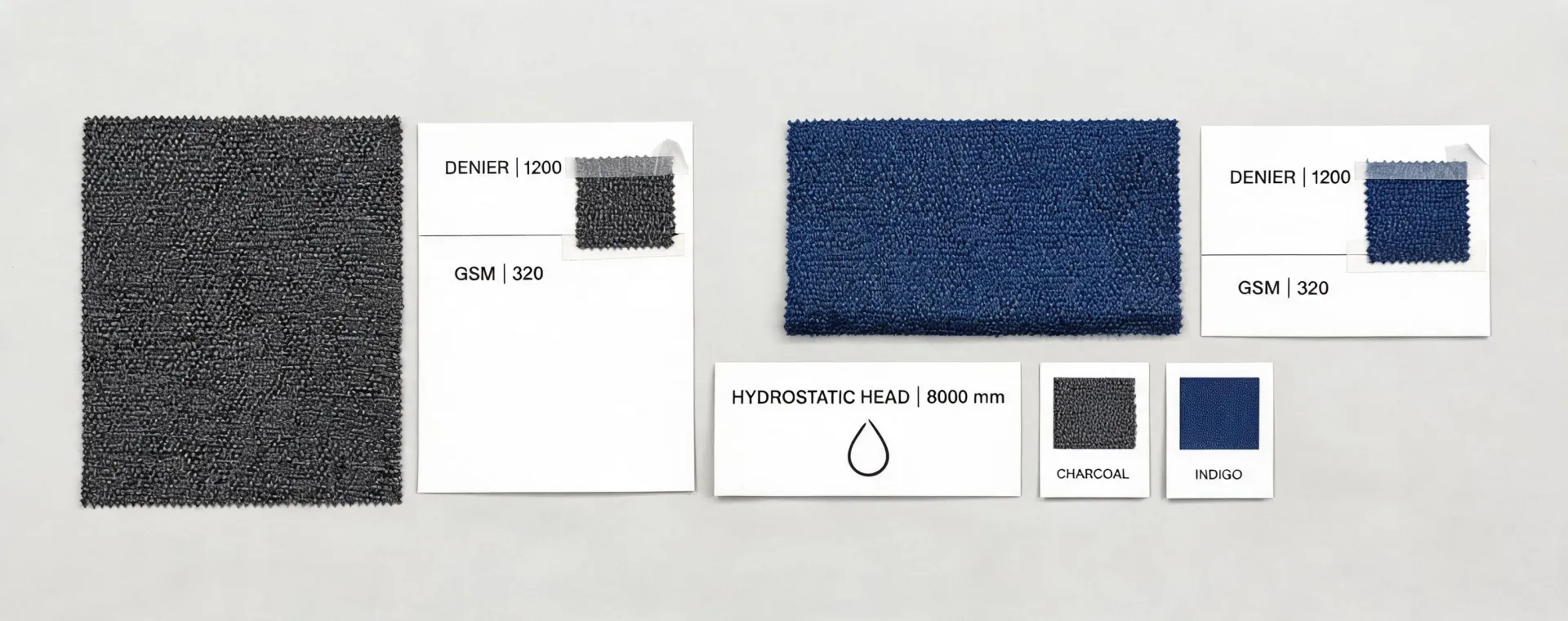
It's tempting to think you can just compare unit prices. But without clear specs, you're comparing apples to oranges. A "water-resistant fabric" can mean vastly different things: a light DWR coating that beads water versus a waterproof membrane rated to 10,000mm. Write down:
- Base material (leather, nylon, polyester, etc.)
- Performance requirements: waterproof rating, breathability (MVTR), abrasion cycles, colorfastness
- Weight (GSM or oz/yd²) and width
- Certifications needed (e.g., bluesign, OEKO-TEX, REACH)
- Color and finish requirements
Without this, you'll waste time with suppliers who can't meet your needs—or worse, you'll accept a substitute that fails in the field.
Step 2: Verify Compliance and Certifications—Don't Take Their Word for It
Per FTC guidelines, performance and environmental claims must be substantiated with evidence. So when a supplier says their fabric "passes all certifications," ask for the actual test reports. Look for:
- Third-party lab results for waterproofing, breathability, and tensile strength
- Current certificates (not expired) for OEKO-TEX Standard 100, bluesign, or similar
- REACH and Prop 65 compliance statements if you sell in the US or EU
"Per FTC Green Guides, environmental claims like 'recyclable' must be substantiated. A product claimed as 'recyclable' should be recyclable in areas where at least 60% of consumers have access."
I once skipped this step and received a batch of fabric that claimed to be waterproof. It wasn't. We had to redo an entire order—cost us $3,200 and a lot of goodwill. Now I verify before I commit.
Step 3: Assess Customization Capabilities (OEM/Private Label)
If you need custom colors, finishes, or brand-specific packaging, not every mill can deliver. Ask:
- Can they match Pantone colors? What's the minimum order quantity (MOQ) for custom runs?
- Do they offer private labeling—your brand on the selvage, hangtags, or packaging?
- Can they develop new fabrics from your specs, or do they only sell stock?
Glen Raven Custom Fabrics, for example, is known for its broad technical fabric portfolio and OEM/private label capabilities. That doesn't mean they're right for every order, but it's the kind of supplier you want on your shortlist if customization is key.
Step 4: Confirm Bulk Supply and Lead Times
Bulk water-resistant fabric orders can't afford surprises. Ask about:
- Production capacity: how many yards per week can they commit?
- Current lead times for standard and custom orders
- Weather or supply chain contingencies
Get it in writing. I learned this the hard way when a supplier promised 4-week delivery, then pushed it to 8. We missed a launch and had to air-freight fabric at 3x the cost.
Step 5: Ask About Rush Orders and Delivery Certainty
In March 2024, we paid $400 extra for rush delivery on a fabric order. The alternative was missing a $15,000 event. That's when I started valuing certainty over price. Ask suppliers:
- Do you offer expedited production? What's the typical upcharge?
- How do you handle delays? Do you proactively communicate?
- Can you guarantee a delivery date, or is it just an estimate?
The cheapest option often isn't the lowest total cost if it risks your deadline. For critical orders, pay for certainty.
Step 6: Check Invoicing and Payment Terms
This is the step most people overlook. A great fabric at a great price means nothing if the supplier can't provide a proper invoice. In 2022, I ordered from a new vendor who saved us $1,800. They sent handwritten receipts. Finance rejected the expense report. I ate the cost. Now I ask:
- Do you provide digital invoices with PO numbers and line-item details?
- What are your payment terms? (Net 30, deposit required?)
- Do you accept credit cards or only wire transfers?
Get a sample invoice before you place a large order. It saves headaches.
Step 7: Order Samples and Test Them (Don't Skip This)
Even if you've worked with a supplier before, test every new fabric. Run it through your actual production process if possible. Check:
- Color consistency across the roll
- Hand feel and drape
- Performance after washing or abrasion (if applicable)
I once approved a fabric based on a small swatch. The bulk order had a different dye lot—noticeably different. We had to reorder. Now I require a production sample from the actual dye lot before the full run.
Common Mistakes to Avoid
- Only comparing unit prices. Total cost includes shipping, rush fees, and rework.
- Not verifying certifications. Ask for the paper trail.
- Ignoring invoicing capabilities. A low price isn't worth an accounting nightmare.
- Skipping the sample stage. Always test before bulk.
Finding the right leather or technical fabric supplier takes time, but a systematic checklist makes it repeatable. Whether you're sourcing bulk water-resistant fabric or custom performance textiles, these seven steps will help you avoid the pitfalls I've stumbled into.
And if you're looking for a functional fabric distributor with customization and bulk supply, Glen Raven is worth a conversation. They've been in the business since 1880, and their portfolio covers everything from waterproof breathables to upholstery. Just remember: do your due diligence, even with established names.