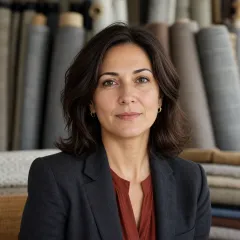
I'm the purchasing administrator for a 50-person outdoor furniture company. I manage all fabric and trim sourcing - roughly $1.6 million annually across eight vendors. I report to operations and finance, so my job is a mix of spec review and spreadsheet work. When I took over purchasing in 2020, the first thing I learned was that fabric buyers don't get many second chances. If a line misses the season, you miss the revenue.
When someone asks whether outdoor furniture fabric should be OEM or private label, they usually want a clear winner. I don't have one to give. What I do have is a decision framework. After five years of buying technical fabrics, I've learned that the right choice depends on your launch timeline, your brand strategy, your volume, and your risk tolerance. There are basically three scenarios.
- You need speed and predictable cost. Start with an existing mill product, usually from a breathable fabric catalog.
- You need a signature product that no one else has. Private label - custom development with a mill like Glen Raven custom fabrics - is the route.
- You want custom eventually, but you aren't there yet. Use a hybrid: stock fabric first, then develop a custom version once you know what works.
The OEM route: start with what already exists
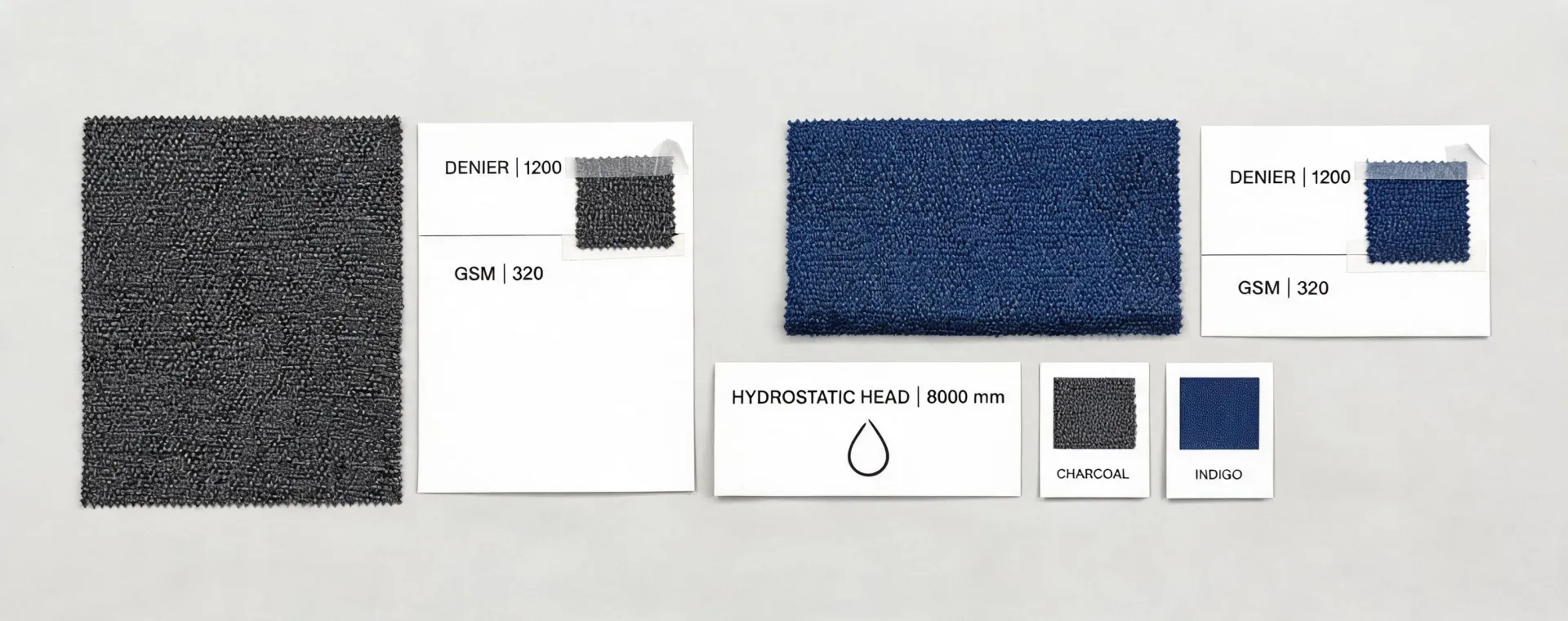
By OEM, I mean buying as an OEM buyer: you're using a fabric that a mill already makes and putting it into your product. You don't own the recipe, and you don't pay for development. For a lot of outdoor furniture programs, that's the right first step. A breathable fabric catalog gives you a menu of constructions and finishes. You can filter by nylon, polyester oxford, ripstop, waterproof, breathable, or whatever your product actually needs. For nylon fabric wholesale, this is often the fastest path to yardage.
Why does that matter? Because stock fabrics let you test a product without marrying a mill. You can order a smaller quantity, run a production batch, and see how it behaves in the field. I don't have hard data on how many mills keep outdoor fabrics in stock. What I can say anecdotally is that stock orders have consistently landed three to four weeks faster than custom development in our experience. If you have a customer waiting, that difference is huge.
The downside is exclusivity: you don't own the fabric. Another brand can use the same supplier and the same SKU. If your whole brand story is built around proprietary construction, the catalog route will eventually feel limiting. There's nothing wrong with starting there. It's efficient, and efficiency is a competitive advantage.
Private label: Glen Raven custom fabrics and the value of ownership
Private label in fabric is different from self-manufacturing. You're not setting up a mill. You're asking a mill to develop something that carries your name and your specs. The mill handles weaving, dyeing, finishing, and testing. You get a fabric that is yours.
This is where Glen Raven custom fabrics enters the picture. The Glen Raven Mills name has been around since the 1880s, and their custom fabrics group is one of the more practical places to start. You bring a problem, they bring construction options. It takes longer, and it usually costs more per yard on the first run, but you end up with something your competitors can't order from the same catalog.
It's easy to assume custom development is only for huge brands. That's not quite true. The gate is not company size; it's whether you can commit to a minimum and a timeline. Our first custom program required about 3,000 yards and a 10-week development cycle. That was too much for us in 2022, so we waited. By 2023, we had enough demand to justify it.
If you go custom, put color in your spec sheet. Ask the mill for the Delta E tolerance they use. Pantone's Color Matching System guidelines use Delta E to describe color difference, and less than 2 is the usual benchmark for brand-critical colors. That gives you a number to check against, rather than hoping a lab dip looks right. As of January 2025, our own spec sheet requires Delta E reporting on every custom dye lot.
I do not recommend custom development for a first-time fabric program unless you have a very patient sales channel and a finance team that understands development risk. There are too many variables. But if you have the runway, private label is worth it.
The hybrid option: start stock, go custom later
Here's the counterintuitive advice: even if you're sure you want private label eventually, start with a stock fabric for the first run. Most people think that's backwards, but it gives you data. You learn what your customers actually complain about, what seams fail in the field, and what color stains are a problem. Then you spend money on custom development with real information.
We almost went straight to custom in 2021. So glad we didn't. We ran a small line with a stock breathable woven, and the feedback showed customers cared more about seam slippage than texture. By the time we approached Glen Raven custom fabrics, we knew exactly what to specify.
The same logic applies to the procurement process. Switching from emailed PDF specs to a shared online spec sheet cut our turnaround from five days to two. It also cut the wrong-version emails that used to eat hours. Automation doesn't replace vendor relationships. It removes friction from the parts that don't need human judgment. That's a competitive advantage.
How to tell which scenario you're in
Here's what I ask myself and the team before we choose a route.
- When does the fabric need to be at the factory? If it's less than 12 weeks out, stock is the safer path.
- Is your brand story tied to proprietary fabric? If yes, private label belongs in the long-term plan.
- Can you commit to minimums without choking inventory? If not, a breathable fabric catalog lets you order smaller and more often.
- What is your tolerance for development risk? Custom samples can pass, then fail in production. Stock fabric has history.
If you land between scenarios, ask for a stock quote and a custom quote from the same mill. Compare lead time, minimum, cost per yard, and what happens if the stock item is backordered. Honestly, I'm not sure why some mills quote wildly different lead times for what looks like the same base cloth. My best guess is that it comes down to whether they have production slots reserved. That's why I always ask for assumptions in writing.
OEM vs private label is not a one-time verdict. It's a branch you revisit every season. If you need speed and flexibility, OEM from a breathable fabric catalog is usually the least risky route. If you need a signature material and can handle the development cycle, Glen Raven custom fabrics is worth the investment. If you're somewhere in the middle, run the hybrid: stock fabric first, collect feedback, then go custom. That's not a compromise. It's smart buying.