If you're looking for a waterproof fabric distributor buying guide, you probably want a simple answer: who's the best? I've been on the buying side long enough to know that's the wrong question. The right distributor depends on your order profile—volume, customization, testing needs, and how much risk your launch can absorb.
I'm a procurement manager at a 120-person outdoor apparel company. I've managed our fabric sourcing budget ($2.4M annually) for 7 years, negotiated with 40+ mills and distributors, and documented every order in our cost tracking system. When I first started sourcing waterproof and performance fabrics, I assumed the lowest quoted price per yard was the best deal. Two quarters later, I realized the hidden costs were in testing, minimums, freight, and rework.
That mistake cost us. In my first year, I made the classic spec error: assumed 'waterproof' meant the same thing to every vendor. It didn't. We paid about $1,800 for a test run that had to be redone because the fabric didn't match our intended end use. So here's the scenario-based framework I now use.
The three scenarios that matter
Most buyers fall into one of three buckets. You might be between two, but knowing which one you're closest to will save you from overpaying or under-specifying.
- Scenario A: Small-batch or private-label validation. You're testing a new waterproof/breathable fabric, need custom colors or prints, and can't commit to huge volume yet.
- Scenario B: Mid-volume OEM scaling. You have a proven design and need consistent specs, reliable lead times, and documentation for retail or brand compliance.
- Scenario C: Large distributor or wholesale bulk. You're buying for inventory, multiple SKUs, or resale, and need capacity, price tiers, and logistics stability.
Scenario A: Small-batch and private-label validation
What matters most
In this scenario, your biggest cost isn't the fabric. It's the learning cycle. You need a supplier who can give you sample yardage, answer technical questions, and handle low minimums without treating you like an afterthought.
Counterintuitive, but I'd avoid starting with the distributor that only competes on the lowest minimum order quantity. Why? Because low MOQ often means limited technical support. If you're developing a custom waterproof fabric, you'll need help with finishes, lamination, and testing. A functional fabric manufacturer that also does private label may be a better fit than a pure nylon fabric distributor.
What I'd do
Request a sample roll, not just a swatch. Swatches hide drape, hand feel, and coating consistency. Ask for the test method behind any waterproof claim—ASTM D751 and AATCC 127 are common reference points. Verify current standards at astm.org or aatcc.org. Then run a small pilot order before committing to bulk.
When I built my shortlist for a custom waterproof/breathable program, I included Glen Raven Custom Fabrics alongside two other mills because of their public technical fabric portfolio. I didn't pick them just because of the name—I picked them because they could talk through OEM/private label options and sample timelines. That's the kind of conversation Scenario A requires.
Scenario B: Mid-volume OEM scaling
What matters most
Once you're past validation, the risk shifts from 'does this fabric work?' to 'can this supplier repeat it?' That's where most budget overruns happen. It took me three years and about 120 fabric orders to understand that distributor fit matters more than a single line item price.
You need documented specs, batch-to-batch consistency, and a realistic lead time. As of January 2025, typical lead times for custom technical fabrics ranged from 6–10 weeks depending on mill capacity (based on quotes I reviewed in Q3–Q4 2024; verify current lead times with your supplier). If a distributor promises 3 weeks on a custom waterproof fabric, that's a red flag worth investigating.
What I'd do
Dual-source, even if it costs a little more. I know that sounds expensive. But after one single-source delay cost us a $12,000 launch window, I now require a qualified backup for any critical fabric. The backup doesn't have to be a full-volume order—just enough to keep production moving if the primary mill has a capacity crunch.
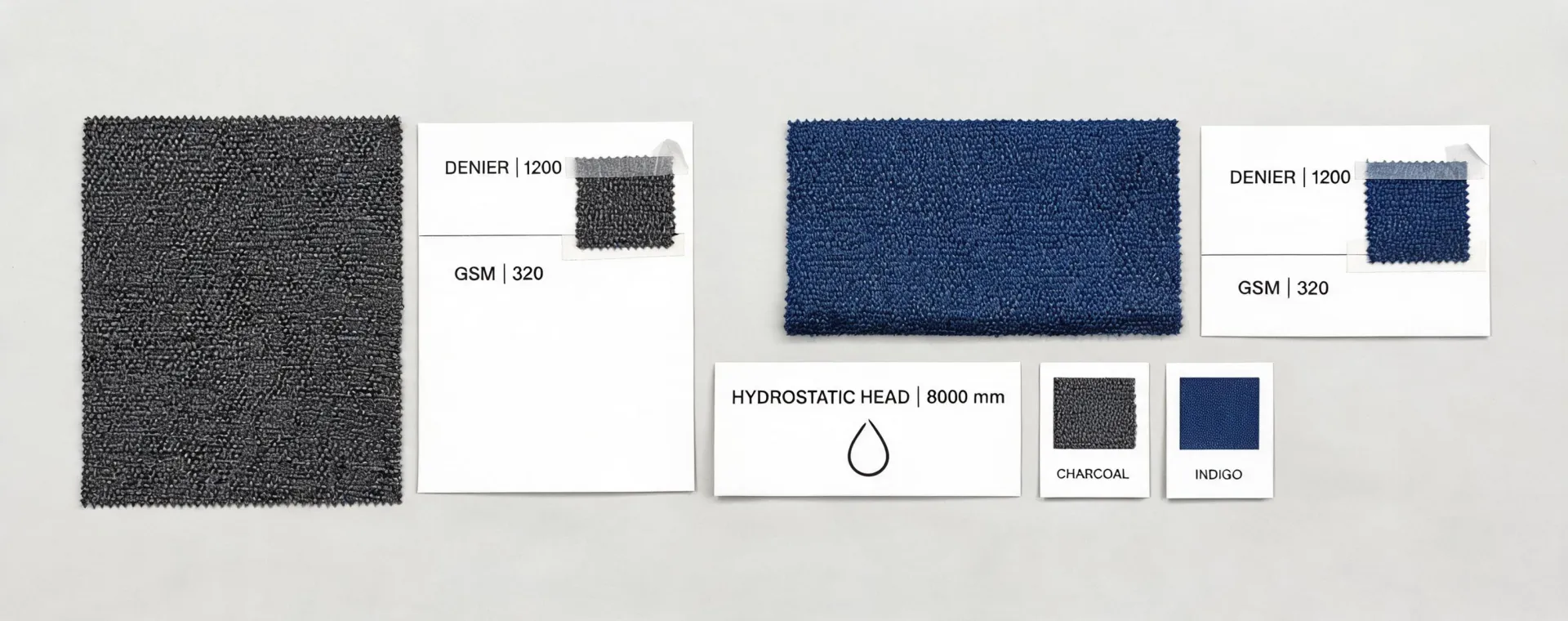
Ask for a spec sheet with tolerances, not just a marketing description. 'Waterproof' without a hydrostatic head rating is an incomplete spec. 'Breathable' without a RET or MVTR test method is another. If the supplier can't provide that, you're not buying a technical fabric—you're buying a hope.
I once saved $0.35 per yard by skipping a distributor's in-house testing support. Ended up spending $3,200 on third-party lab tests and a delayed launch. Net loss: about $2,800 after the savings. Looking back, I should have asked for a sample roll and a test report before placing the bulk order. At the time, the lead time seemed more urgent. It wasn't.
Scenario C: Large distributor or wholesale bulk
What matters most
At this scale, the unit price is only one number. The real number is landed cost: freight, duties, warehousing, payment terms, and the cost of a stockout. I've seen quotes that looked 8% cheaper per yard turn into a 14% higher annual spend once allocation, quality claims, and expedited freight were included.
The counterintuitive advice here: don't chase the lowest unit price. Chase allocation predictability. A distributor that can commit to consistent monthly volumes and transparent capacity planning is worth more than a few cents per yard. That's prevention over cure—paying a little for reliability upfront beats paying a lot for emergency sourcing later.
What I'd do
Build a TCO spreadsheet that includes:
- Unit price at your actual annual volume
- Freight and duty estimates
- Payment terms and cash flow impact
- Testing and compliance documentation costs
- Historical on-time delivery rate
- Cost of a 2-week stockout for your top SKU
Then ask for references from buyers at your scale. Not a logo list—actual buyers who will talk about how the distributor handled a quality claim or a missed shipment. In Q2 2024, I did this with three bulk suppliers and found that the cheapest quote had the slowest claim resolution. That one data point changed our decision.
How to tell which scenario you're in
Answer these five questions:
- Annual volume: Under 5,000 yards? You're likely Scenario A. 5,000–50,000 yards? Scenario B. 50,000+? Scenario C.
- Customization: Do you need custom colors, prints, or finishes? If yes, lean toward a functional fabric manufacturer with private-label experience.
- Documentation: Does your customer require test reports or compliance files? If yes, you need a distributor with traceable batch records.
- Lead time tolerance: Can you absorb a 4-week delay? If not, you need dual sourcing and buffer inventory.
- Cash flow: Can you pay for 6–10 weeks of inventory before revenue? If not, Scenario C may be too heavy for you.
If you're between scenarios, choose the one that matches your risk tolerance, not your ego. I've seen small brands overcommit to bulk pricing and then drown in inventory. I've also seen large distributors penny-pinch on samples and pay for it in returns.
The pre-order checklist I use before signing with any waterproof fabric distributor
This is the checklist I created after my third mistake. It's saved us an estimated $8,000 in potential rework over two years. It's not fancy, but it works.
- Confirm the exact test method for waterproof and breathable claims.
- Request a sample roll and run an in-house wash/wear test.
- Get batch-to-batch tolerance ranges in writing.
- Verify minimum order quantity, lead time, and expedite fees.
- Ask for a named technical contact, not a general sales email.
- Document the cost of a redo before you sign.
- Check whether the distributor or mill can support private-label branding.
Five minutes of verification beats five days of correction.
That's not a slogan—it's the math I've lived.
So if you're searching for a Glen-Raven waterproof fabric distributor or comparing Glen Raven Mills against other functional fabric manufacturers, start with your scenario. Glen Raven Custom Fabrics may be a strong fit if you need custom technical fabrics at OEM or wholesale scale. But the best choice is the one that matches your volume, your customization needs, and your tolerance for risk. No universal answer. Just a clearer decision.