I'll start with a confession: I almost bought the wrong fabric last year. Not because the supplier lied, but because I was comparing quotes the same way I'd compare shipping rates. That's not how nylon fabric works.
We use a lot of performance nylon — ripstop for outdoor packs, polyester oxford for covers, softshell for a private-label line. For a long time, I treated "70D nylon" as a commodity. Get three quotes, pick the lowest, move on. Then a batch of "identical" fabric from a different mill failed abrasion testing in March 2023, and I had to rework 1,400 units. That was expensive. More importantly, it changed how I think about every fabric quote that crosses my desk.
So if you're searching for performance fabric wholesale and wondering why one supplier quotes $1.80 and another $2.40, I get it. The numbers look like the whole story. They're not.
The Real Problem: You're Comparing Categories, Not Fabric
The first mistake in wholesale fabric buying is treating "nylon" as a specification. It's not. Nylon is a family. A 70D ripstop nylon from one mill can behave completely differently from the same denier from another mill. Yarn quality, weaving tension, finishing chemistry, coatings — all of it changes how the fabric performs.
When I audit our supplier quotes (I do this every year now), I look for what's missing. If a quote says "nylon fabric" and nothing else, that's a red flag. It's like a carpenter receiving a quote for "wood." You'd ask what kind, thickness, grade, finish. Fabric deserves the same respect.
The deeper issue: a lot of us default to price because it's the only number we can compare. I learned this the hard way. Last year I assumed "same specifications" meant identical results across vendors. Didn't verify. Turned out one mill used a lighter-weight dye lot, and the coating didn't hold. The finished bags looked fine for about two weeks, then the lining started peeling. We had to issue replacements. The "same" nylon wasn't the same at all.
This is also where compliance claims get tricky. Everyone wants recycled nylon or eco-friendly performance fabric, but those claims need to be defensible. Per FTC Green Guides (ftc.gov/green-guides), environmental claims like "recycled" must be truthful and substantiated. If you're buying wholesale, ask for documentation, not just marketing copy.
The Hidden Costs That Don't Show Up on a Quote
Here's what they don't tell you on the first quote:
- Testing and compliance. Does the fabric meet your abrasion, tear strength, and water repellency requirements? Ask for test reports.
- Color matching and shade bands. If your order has three colorways, each dye lot has to match. That costs money and time.
- MOQs and lead times. A lower yardage price with a longer lead time can destroy your launch schedule.
- Finishing and customization. DWR, backcoating, and lamination are often quoted separately.
When I compared four mills for 40,000 yards of polyester oxford in Q2 2024, the cheapest quote saved $0.13 per yard. But it didn't include shade matching, required a 12-week lead time, and had a 20,000-yard minimum per colorway. The runner-up was $0.09 more per yard but included production samples, shade bands, and an 8-week lead time. On paper, the cheap option saved $5,200. In reality, we would have lost more than that in rework, delays, and missed deadlines. When you calculate total cost of ownership (TCO), that "cheap" quote came out higher than the one with real services included.
Over the past six years of tracking every invoice, I've realized that most budget overruns aren't from the big stuff. They're from small charges — strike-offs, color approvals, rush shipping, QC inspections. Those add up fast (think 20-30% on top of the quoted yard price in some cases).
The Real Cost of Choosing the Wrong Fabric Supplier
The worst part isn't the fabric. It's what happens after the fabric fails. You lose labor, production time, and customer trust. A $1,200 redo is annoying. A 2,000-unit recall is a different story.
That's why I'd rather pay a little more upfront for a supplier who can prove the fabric works. The "cheap" option is only cheap if everything goes right. And in my experience, it usually doesn't.
What I Actually Do Now
Now my rule is simple: I don't buy from a quote. I buy from a spec sheet plus test data plus a conversation. If a supplier can't explain how their nylon is made, what the finish is, and how it performs on specific tests, I don't proceed.
Specifically, I ask for:
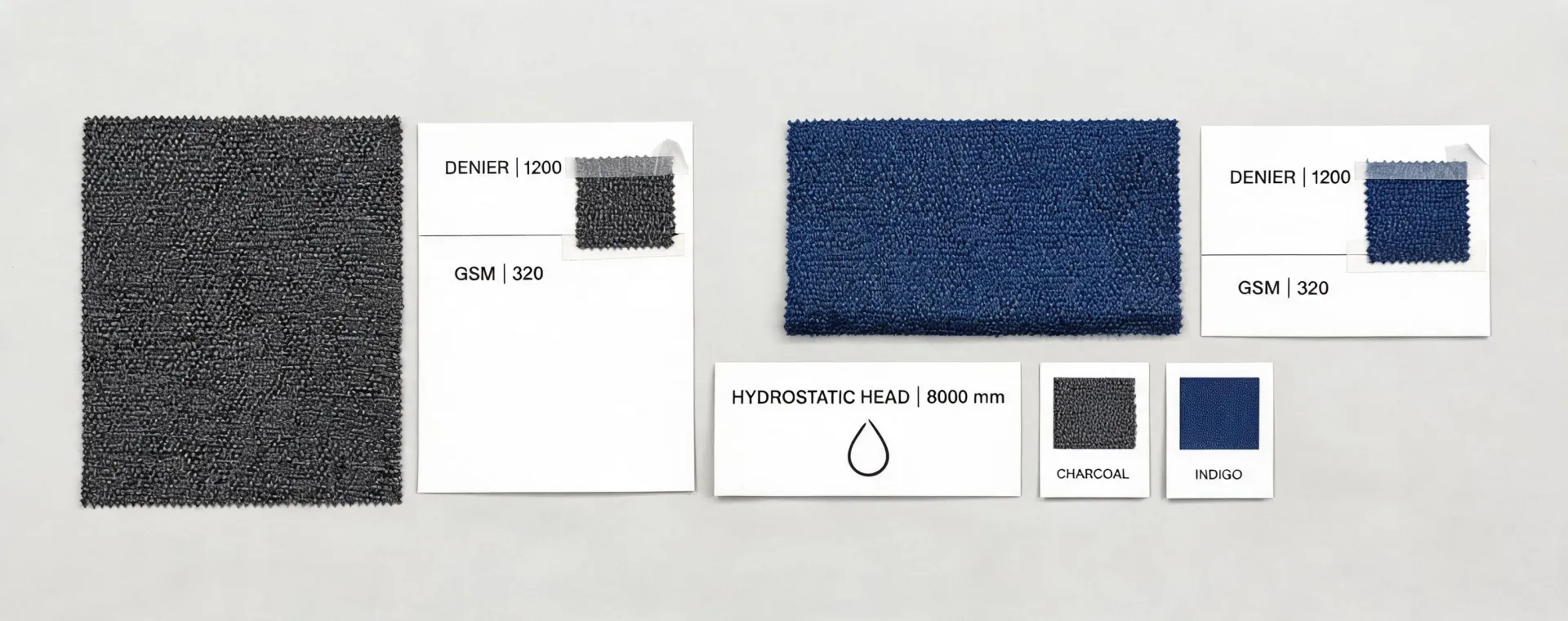
- A full technical spec sheet (denier, construction, finish, weight).
- Test results from a recognized lab for the properties that matter.
- A shade band or physical sample for each colorway.
- MOQ, lead time, and quoting assumptions in writing.
- Reference products — what end-use products have used this exact fabric?
After getting burned on hidden fees twice, I built a simple TCO calculator. It's not fancy, but it covers the stuff I used to forget (and that one bad coating batch cost me). It's the only way I compare suppliers now. It's also faster: the process cut our sourcing time from five days to two.
When I look at a supplier like Glen Raven, it's not because they're perfect. It's because Glen Raven Mills operates like a technical fabric company, not just a commodity trader. If you're looking for performance fabric wholesale, that distinction matters. A mill like this can talk about yarn, finish, coating, and end-use instead of just sending a price list. They also offer Glen Raven custom fabrics for private label and OEM programs, which helps when you need a specific hand feel, color, or treatment.
As an outdoor fabric supplier, Glen Raven also understands hardshell, softshell, and ripstop in the context of how those fabrics are used — not just how they're priced. For someone in procurement, that's worth a lot, because it means fewer surprises later.
How to Choose Nylon Fabric for Wholesale
Start with the end use. Then get the specs. Then price the total cost, not the rollout. And if you can, choose a partner who has the technical depth to tell you when your idea won't work — because that's cheaper than finding out in production.
The point isn't to scare you. It's to make sure the price you're comparing is the total price, not the per-yard price. The cheapest fabric is expensive if it fails. The most expensive fabric is cheap if it works.