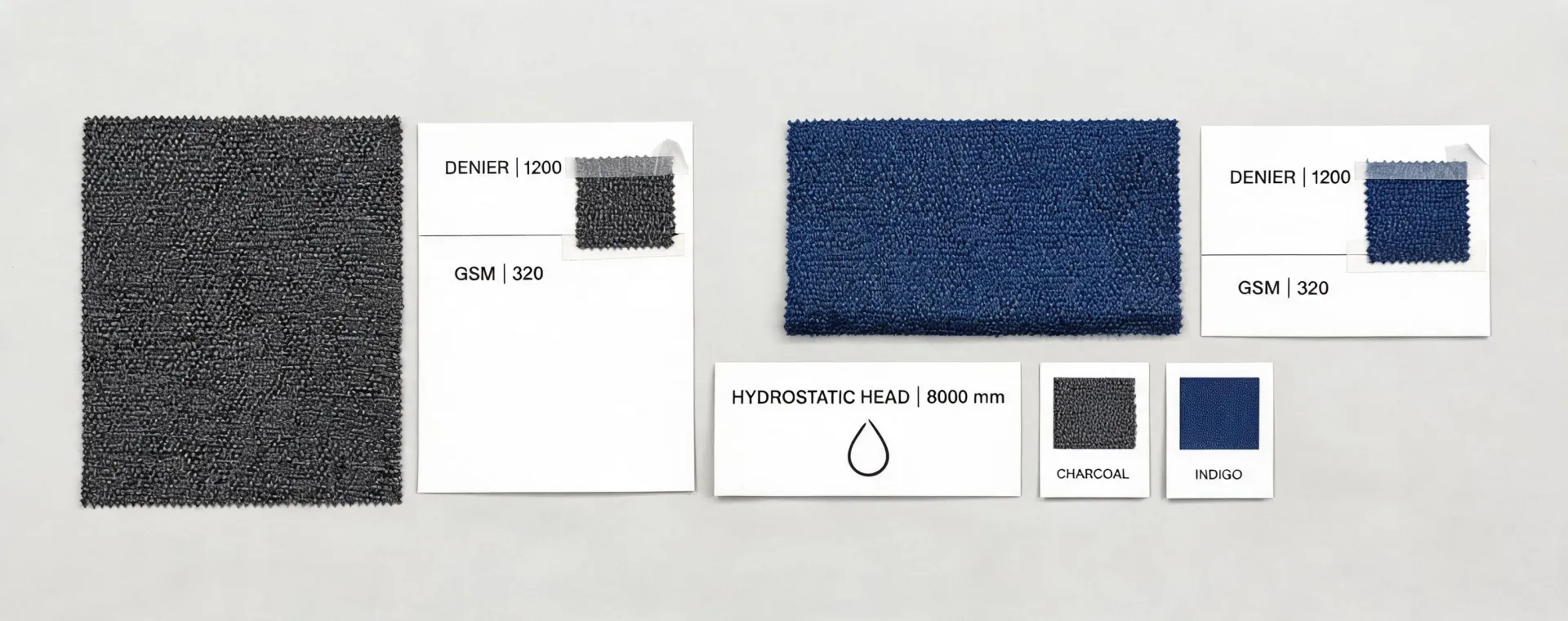
When I first started reviewing fabric deliveries, I assumed buying direct from the mill was always the right call. No middleman, clearer communication, better pricing on volume. Four years and roughly 200 lot inspections later, I've learned it's not that simple.
I'm a quality and compliance manager in the technical textile industry. I review every fabric lot before it reaches production—about 250 unique fabrics a year. In 2024, I rejected 11% of first deliveries for spec deviations. That experience gave me a front-row seat to one of the most common sourcing questions in this industry: should we buy performance fabric direct from a mill, or through a distributor?
This guide compares those two paths across three dimensions: specification control, consistency, and total cost. At the end, I'll give you the scenarios where each approach wins.
Why the Sourcing Model Matters
If you're building an OEM or private label product, the fabric decision isn't just about price per yard. It's about whether you can replicate that first approved roll—months later, in larger quantities, under different production schedules.
A distributor warehouses fabric from multiple mills, cuts and ships small quantities, and adds a margin for convenience. A mill like Glen Raven operates the looms, runs the finishing line, and can engineer fabric to your exact specification.
That difference has real quality control implications.
Dimension 1: Specification Control
When you buy custom fabric from a mill, you control the variables.
You specify the yarn count, the weave structure, the finish chemistry, the width, the weight per square meter. Need a 200-denier ripstop nylon with a DWR finish and a specific hydrostatic head rating? The mill's technical team builds the fabric around those numbers. You send a Pantone reference, they match it before production starts—not after.
Distributors, by contrast, sell what's on the shelf. That's not inherently bad. Many distributors carry excellent fabrics from established mills. But the specs are fixed. You can't ask a distributor to adjust the weave density or change the finish formula, because they don't control the production process.
From my inspection log, this shows up in the first QC check.
When I receive a custom run from a mill, I compare the spec sheet against the physical goods: weight, width, color, hand-feel, tensile strength. With a distributor order, I'm checking against the manufacturer's published specs—which the distributor may or may not have verified.
I've seen both go wrong. I've rejected distributor batches where the listed weight was 210 gsm but the fabric measured 190. And I've rejected mill-direct batches where the color drifted half a shade from the approved reference.
But the difference is accountability. With the mill, I can demand corrective action because they own the process. With a distributor, I'm one step removed—they have to go back to the mill, and the accountability chain stretches.
Dimension conclusion: If your product demands tight specification control—and it does, if you're running a private label program—mill direct gives you better quality leverage.
Dimension 2: Consistency Across Batches
This is where my thinking changed.
I used to believe that buying standard fabric through a distributor was riskier than mill direct. The logic seemed obvious: fewer hands on the product, fewer chances for error. After hundreds of deliveries, I've found the opposite is often true for commodity fabrics.
Distributors aggregate demand across many customers. That volume creates leverage. When a distributor receives a batch with shade variation, they push back on the mill with real weight—their business depends on it. I can't count how many times a distributor flagged a lot discrepancy before I caught it in my own inspection.
Meanwhile, a mid-size buyer ordering directly from a mill for standard fabric is one order among many. If that order isn't large, the mill may not apply the same QC rigor. I'm not saying every mill works this way, but I've audited enough factories to know that attention follows order size.
This dynamic flips entirely with custom fabric. When you spec a unique construction with a mill, the QC parameters are written into the manufacturing order. The mill can't substitute materials or alter the finish without breaking the contract.
So here's the nuance: for standard, off-the-shelf fabrics, a strong distributor can deliver better batch-to-batch consistency than going direct to a mill. For custom fabric, mill direct is the only way to get what you need.
Dimension conclusion: If you're buying commodity nylon or polyester oxford for a straightforward application, a distributor may give you better consistency than a direct mill order. If your fabric has custom specifications, mill direct is necessary—and the QC trail is clearer.
Dimension 3: MOQ, Lead Time, and Total Cost
Let's talk numbers.
Custom runs with a technical mill typically require minimums around 1,000 to 3,000 yards, depending on the construction and finishing complexity. Lead times run 8 to 16 weeks—time for yarn procurement, weaving, finishing, and QC verification.
Distributor stock ships in days. Minimums can drop to 50 or 100 yards. For small runs, that convenience is real.
But cost isn't price per yard.
In our Q1 2024 quality audit, we tracked eight fabric sourcing decisions through to final production. The "cheap" stock fabric from a distributor cost 23% more than the original quote once we accounted for rework and a rushed re-order caused by a color mismatch.
I've also seen the reverse: a brand specified custom fabric when stock fabric would have worked fine. They paid a $6,000 setup fee and committed to a 2,500-yard minimum—for a product line that needed 800 yards.
Take this with a grain of salt, because every sourcing decision is context-dependent. But here's a solid reference point: the Pantone Color Matching System sets industry-standard color tolerance at Delta E < 2 for brand-critical colors. Delta E between 2 and 4 is noticeable to trained observers; above 4 is visible to most people. If your brand color shifts between production runs because you're buying whatever lot is available, that's a brand equity cost the purchase order won't show.
Dimension conclusion: For very small runs, distributor stock is the pragmatic choice. For anything tied to a brand identity or a long-term product line, custom mill-direct fabric has a lower total cost of ownership, even at a higher upfront per-yard price.
When to Choose Mill Direct
Based on what I've documented across 200+ fabric deliveries, these are the scenarios where going direct to a mill makes sense:
- You're building a private label program. Your fabric carries your brand story. You need custom colors, custom performance attributes, and dependable repeatability.
- You have technical requirements. Waterproofing, breathability, hydrostatic head, abrasion resistance—these are engineered, not selected.
- Your volume clears the MOQ anyway. If you're producing 2,000+ units per season, you'll likely hit mill minimums regardless. At that volume, the per-yard pricing advantage of mill direct matters.
- You need compliance documentation. Established mills like Glen Raven, operating from Burlington, NC, maintain the testing data and certification trails that private label programs require.
When to Use a Distributor
These scenarios call for a distributor:
- You're validating a new product line. Buy 100 yards, build samples, test demand—before committing to thousands of yards of custom fabric.
- Your application is commodity-grade. Basic nylon fabric or polyester oxford for a non-technical use? Stock inventory saves you setup fees and lead time.
- You need quick turnaround. Trade shows, urgent orders, fill-in requirements. Distributor stock ships in days.
- You're sourcing materials outside mill specialties. If you're sourcing leather fabric for accessories and don't have an established mill relationship, a specialist distributor is the practical entry point.
The Bottom Line
I have mixed feelings about the advice I'm giving you here, because I've seen both models fail and both models succeed.
Part of me wants to say "just go direct to the mill"—it's cleaner, you own the process, and your quality leverage is real. Another part knows that for a small brand with limited capital, a distributor is genuinely the right call.
The reconciliation: choose based on the role your fabric plays. If it's a commodity input, buy from a distributor and preserve your capital. If it's central to your brand—the material people touch, feel, and judge—custom mill-direct fabric is an investment in perceived quality.
It took me four years and a lot of rejected deliveries to stop framing this as "cheap option vs. expensive option." They're two different tools for two different jobs.
If you're considering custom performance fabric for a private label program, I'd start by talking with a mill's technical team early. Bring your target specs, your volume estimate, and your color standard. A reputable mill like Glen Raven can give you a feasibility assessment with MOQs and lead times. That conversation will tell you more about whether custom fabric fits your situation than any article can.
Just don't make the call on per-yard price alone. I've watched that math fail too many times to count.